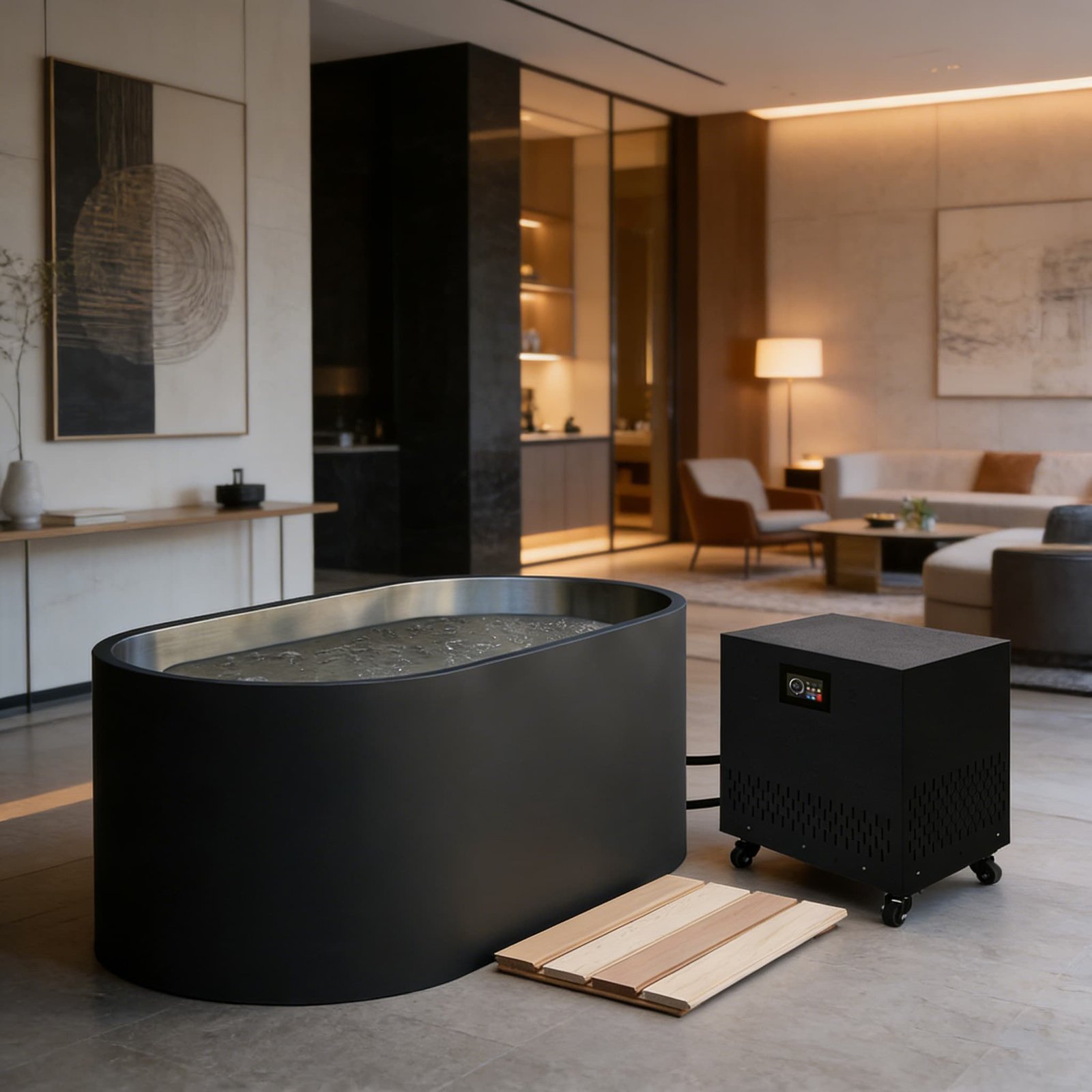
HP is the number everyone looks at first when choosing a cold plunge chiller, and it is also the number most people misunderstand. The assumption is simple: higher HP means colder water. But that is not how refrigeration works, and buying based on that assumption leads either to overspending on more power than you need, or — more commonly — buying something underpowered that runs flat out and still cannot hold your target temperature.
This guide explains what HP actually controls, how to calculate what your specific setup requires, and which 1HP cold plunge chiller is right for different use cases. As a cold plunge chiller manufacturer supplying facilities across more than 80 countries, we see both ends of this problem regularly — the gym that bought a 0.5HP unit for a 400-litre commercial tub, and the home user who bought a 1.5HP unit for a 150-litre bathtub. Neither was happy with the outcome.
What HP Actually Controls — And What It Does Not
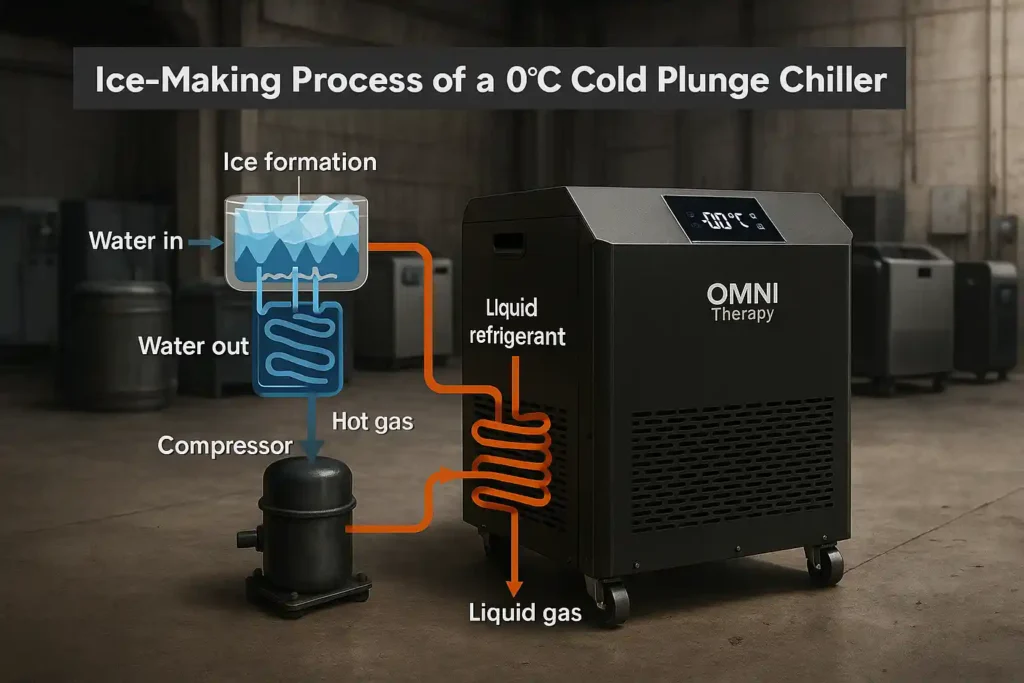
Let us start with the core misconception: HP does not determine how cold the water gets. Any chiller — 0.5HP or 1.5HP — can cool water to 3°C given enough time and the right conditions. What HP determines is two things.
First, cooling speed. A higher HP chiller cools the same volume of water faster. A 1HP unit cooling 200 litres from 20°C to 10°C might take 2 hours. A 0.5HP unit doing the same job might take 4 to 5 hours. If you want your tub ready quickly after filling or after a session, HP matters.
Second, the ability to maintain temperature under load. This is the more important factor. Once the water reaches your target temperature, the chiller switches to maintenance mode — cycling on and off to compensate for heat gain from the ambient environment. If the heat gain is greater than the chiller’s capacity, it runs continuously without ever quite reaching the target. This is where undersized units fail.
According to ASHRAE refrigeration capacity standards, cooling capacity is measured in kilowatts (kW) under defined ambient and load conditions. The HP rating is a proxy for this capacity — but real-world performance varies significantly depending on ambient temperature, insulation quality, and duty cycle. Understanding this distinction is the key to choosing the right unit.
Heat gain comes from three sources: the ambient air temperature around the tub, the insulation quality of the tub walls, and the surface area of the water exposed to air. A well-insulated indoor tub in a cool room has minimal heat gain. An uninsulated outdoor tub in a hot climate has enormous heat gain. The same chiller behaves completely differently in these two scenarios.
The Four Factors That Determine Your HP Requirement
1. Tub Volume
Volume is the starting point. More water requires more energy to cool and more energy to maintain at temperature. As a baseline rule: 0.5HP handles up to approximately 200 litres in ideal conditions, 1HP handles 200 to 400 litres comfortably, and 1.5HP is appropriate for 400 litres and above or any setup with significant heat gain.
2. Tub Insulation
A purpose-built cold plunge tub with 40 to 60mm of closed-cell foam insulation loses heat slowly. The chiller cycles comfortably. An uninsulated vessel — a stock tank, a standard bathtub, a thin-walled container — loses heat continuously and dramatically. As we covered in our guide on using a bathtub as a cold plunge, an uninsulated bathtub can require the same HP as a properly insulated tub twice its volume. This single factor changes the HP calculation more than anything else.
3. Ambient Temperature
Chiller HP ratings are measured under standard test conditions — typically around 20°C ambient. If your chiller operates in a hot garage, an outdoor space in summer, or any environment regularly above 25°C, its effective capacity drops. In a 35°C ambient environment, a 0.5HP chiller performs closer to what a 0.3HP unit would deliver under standard conditions. For hot climates or outdoor installations, always add 0.5HP to your baseline calculation.
4. Usage Frequency
For single-user home use with one or two sessions per day, any correctly sized chiller manages fine. For commercial settings with multiple users throughout the day — each session adding body heat to the water — the chiller needs additional headroom. A gym running 10 or more sessions per day needs a unit with genuine commercial capacity, not a home-grade unit running at its limit.
The HP Selection Chart
| Setup | Volume | Insulation | Ambient Temp | Recommended HP | OMNI Ice Model |
|---|---|---|---|---|---|
| Home use, indoor, insulated tub | Under 200L | Good | Under 25°C | 0.5HP | CHU-05-RV |
| Home use, bathtub or lightly insulated vessel | 150–250L | Poor | Under 25°C | 0.8HP | CH-08-RV |
| Home/boutique gym, insulated tub, temperate climate | 200–350L | Good | Under 30°C | 1HP | CHM-10-RV / CHU-10-RV |
| Outdoor, hot climate, or semi-commercial use | 250–400L | Good | 25–35°C | 1–1.5HP | CHU-10-RV / CHU-15-RV |
| Commercial facility, high-traffic daily use | 300L+ | Good | Any | 1.5HP+ | CHU-15-RV |
Breaking Down Each HP Level — And Which OMNI Ice Model Fits
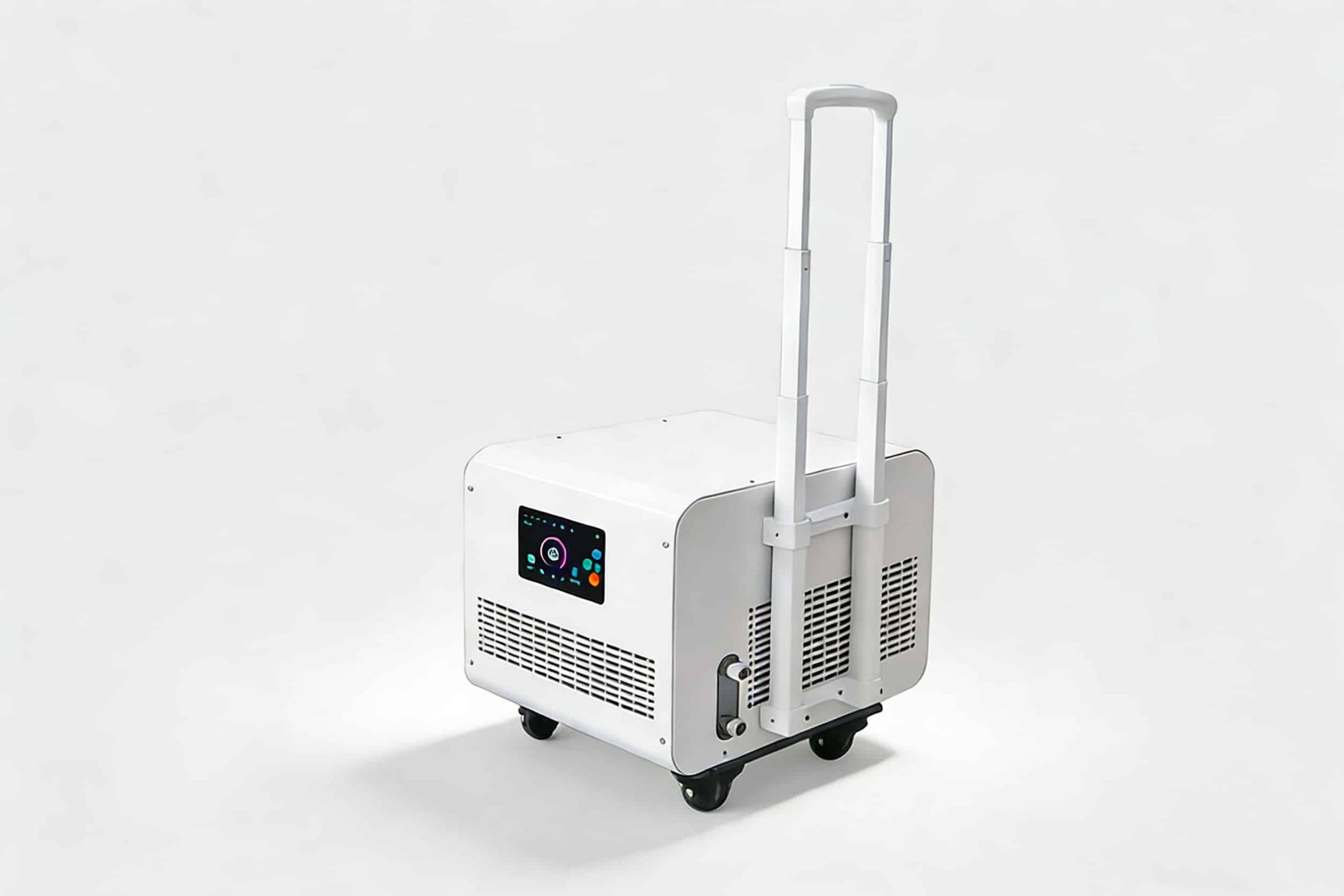
0.5HP: The Entry Point for Home Use
Entry Level
CHU-05-RV — 0.5HP Cold Plunge Chiller
The CHU-05-RV is the right choice for a single-user home setup with a well-insulated tub under 200 litres in a temperature-controlled indoor environment. Despite being the smallest unit in the lineup, it reaches 0°C — something many competitor 0.5HP units cannot do. WiFi app control means you can pre-cool the tub before your session without being in the room.
Where it falls short: outdoor use in warm climates, bathtubs without insulation, or any setup where the chiller will run more than a few hours per day. Push it beyond its comfort zone and it will run continuously without reaching target temperature.
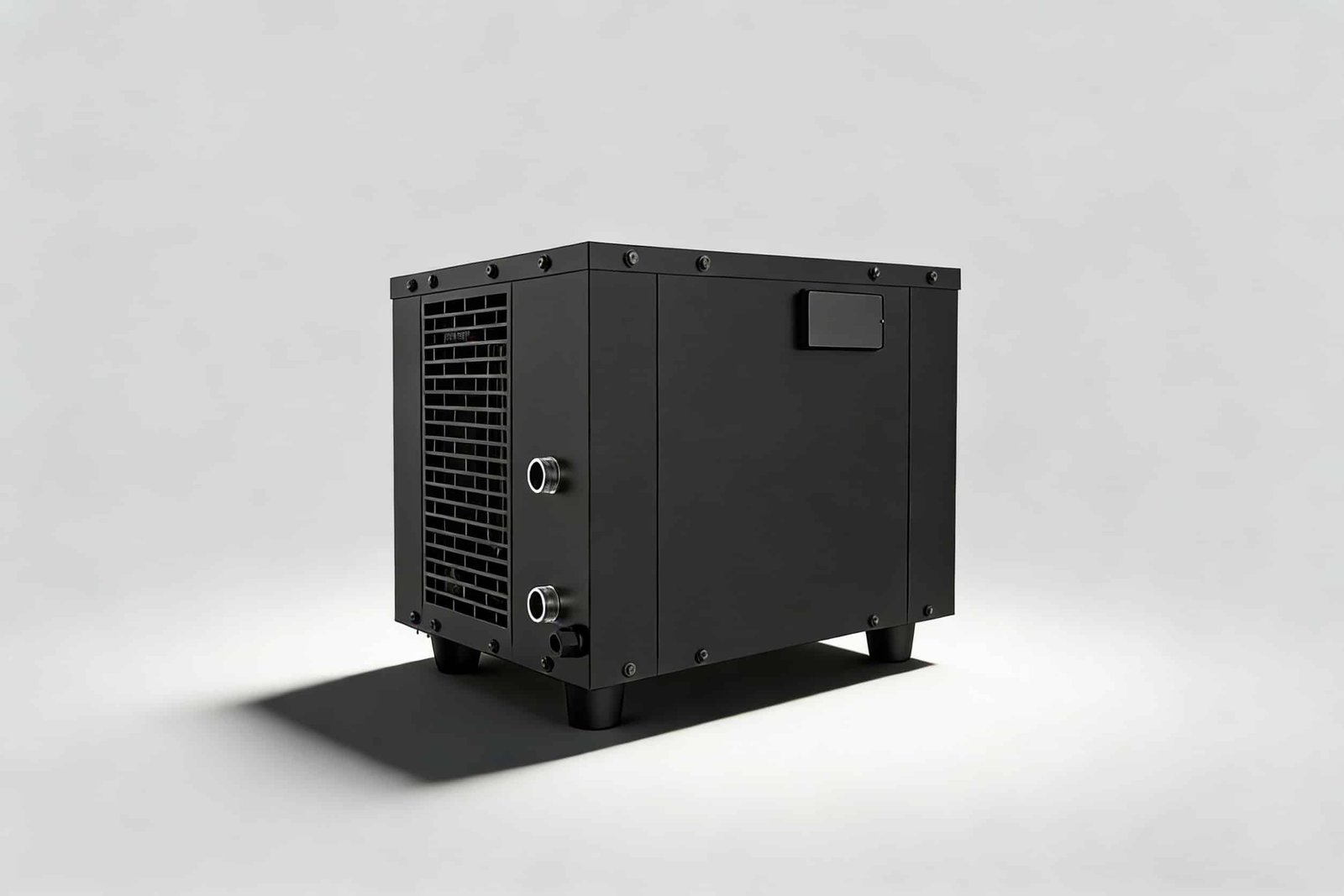
0.8HP: The Overlooked Middle Ground
CH-08-RV — 0.8HP Cold Plunge Chiller
The CH-08-RV sits between the 0.5HP and 1HP options and is often overlooked, but it fills a specific gap well. If you have a bathtub or lightly insulated vessel in the 150 to 250-litre range, or you are in a moderately warm environment where 0.5HP would struggle but 1HP feels like more than you need, the 0.8HP unit is the practical middle ground.
The physical button control rather than WiFi app makes this the most straightforward unit to operate — no app setup, no connectivity requirements, just set the temperature and go. Note that its minimum temperature is 3°C rather than 0°C. For most therapeutic use this is perfectly adequate, but if ice-cold water is specifically your goal, look at the 1HP options.
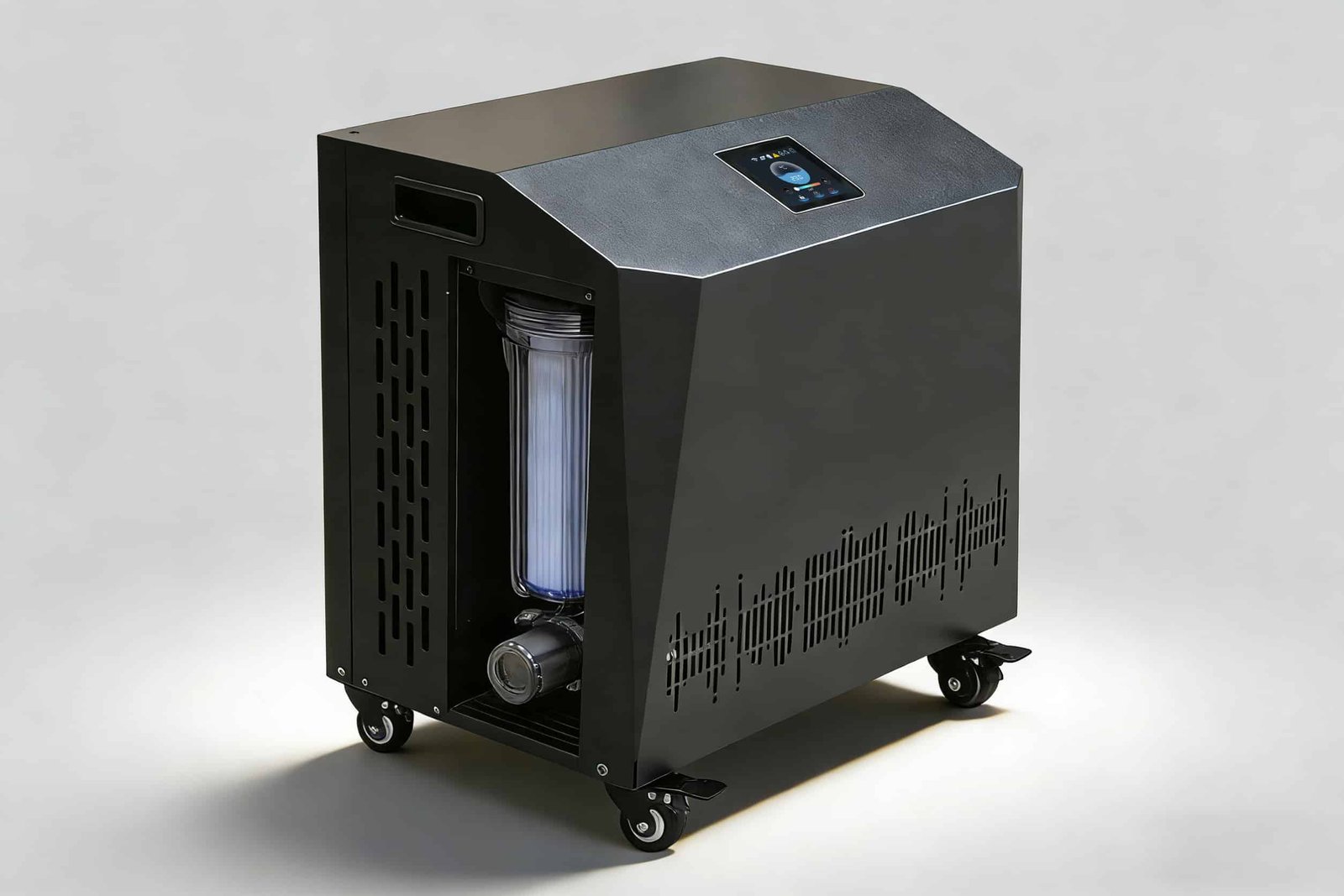
1HP: The Standard for Serious Cold Therapy
1HP is where most serious home users and smaller commercial setups should be. It handles the range of real-world conditions — moderately warm environments, tubs without perfect insulation, regular daily use — without running at its limit. There are two distinct 1HP options in the OMNI Ice lineup, and choosing between them depends on what features matter most to you.
Smart Control + Heating
CHM-10-RV — 1HP Smart Cold Plunge Chiller with Heating
The CHM-10-RV is the most versatile unit in the lineup. Its full 3°C to 42°C range means it functions as both a cold plunge chiller and a hot therapy unit — useful for contrast therapy protocols where you want to alternate between cold and heat in the same tub. The built-in heating capacity of 4.04kW heats water quickly, making it a genuinely dual-purpose machine.
The self-priming circulation pump is built in, so there is no separate pump to source or install. The external cartridge filter is easy to replace. For users setting up a home cold plunge for the first time, this is the plug-and-play 1HP option — connect two hoses, fill the tub, set the temperature via the app.
Best Cooling Power at 1HP
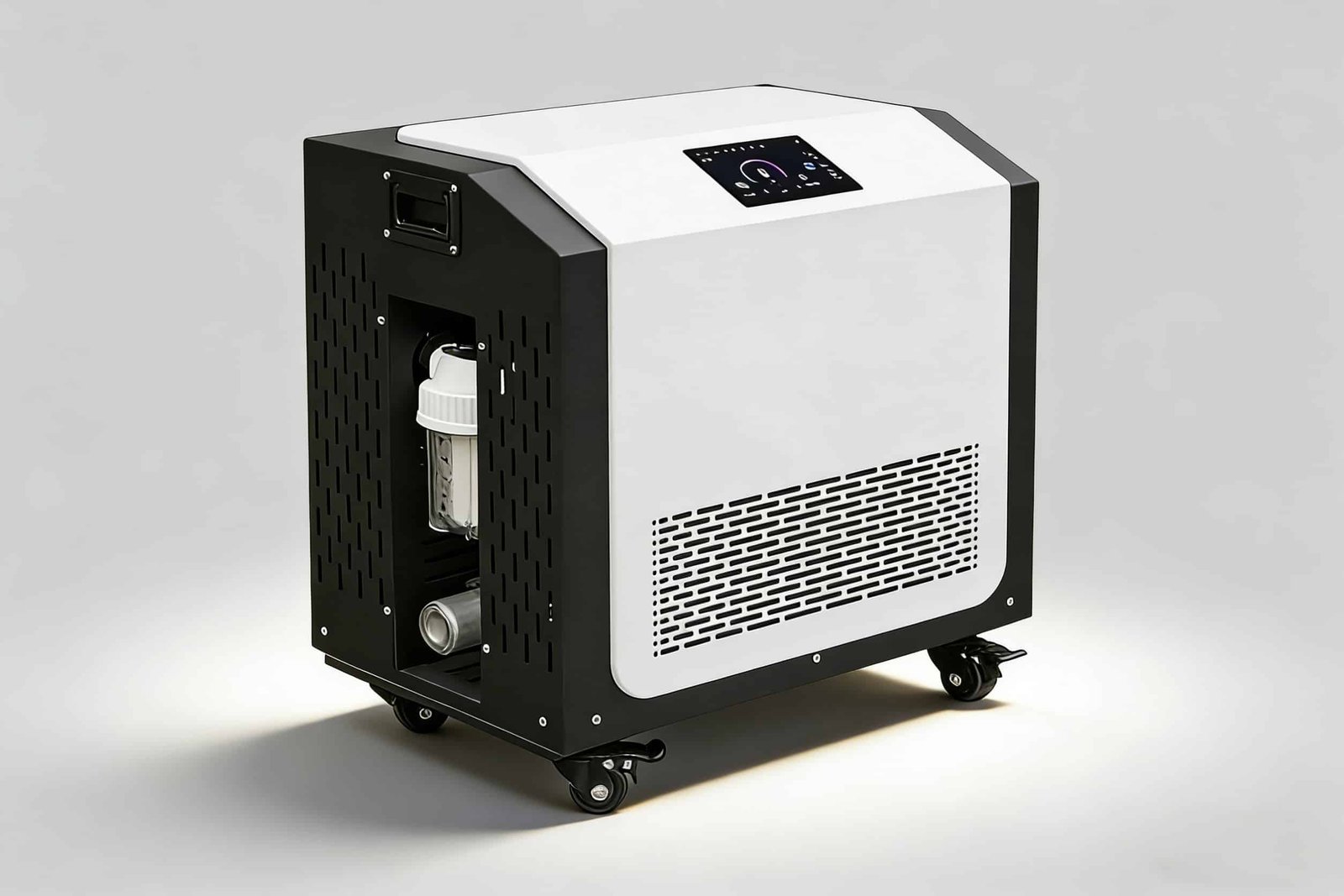
CHU-10-RV — 1HP Cold Plunge Chiller with 0°C Capability
The CHU-10-RV has the highest cooling capacity of the two 1HP models at 2.81kW — meaningfully more than the CHM-10-RV’s 2.51kW. It also reaches 0°C, which the CHM-10-RV does not. For users who specifically want ice-cold water — the kind of cold that serious athletes and cold therapy enthusiasts are aiming for — the CHU-10-RV delivers it with more headroom.
The trade-off is that it does not have the heating function of the CHM-10-RV. If contrast therapy is not part of your routine, that is not a relevant trade-off — and you get more cooling power for the same HP rating. For outdoor setups, hot climates, or anyone who wants maximum cooling performance at 1HP, this is the stronger choice.
1.5HP: For Commercial Use and Demanding Conditions
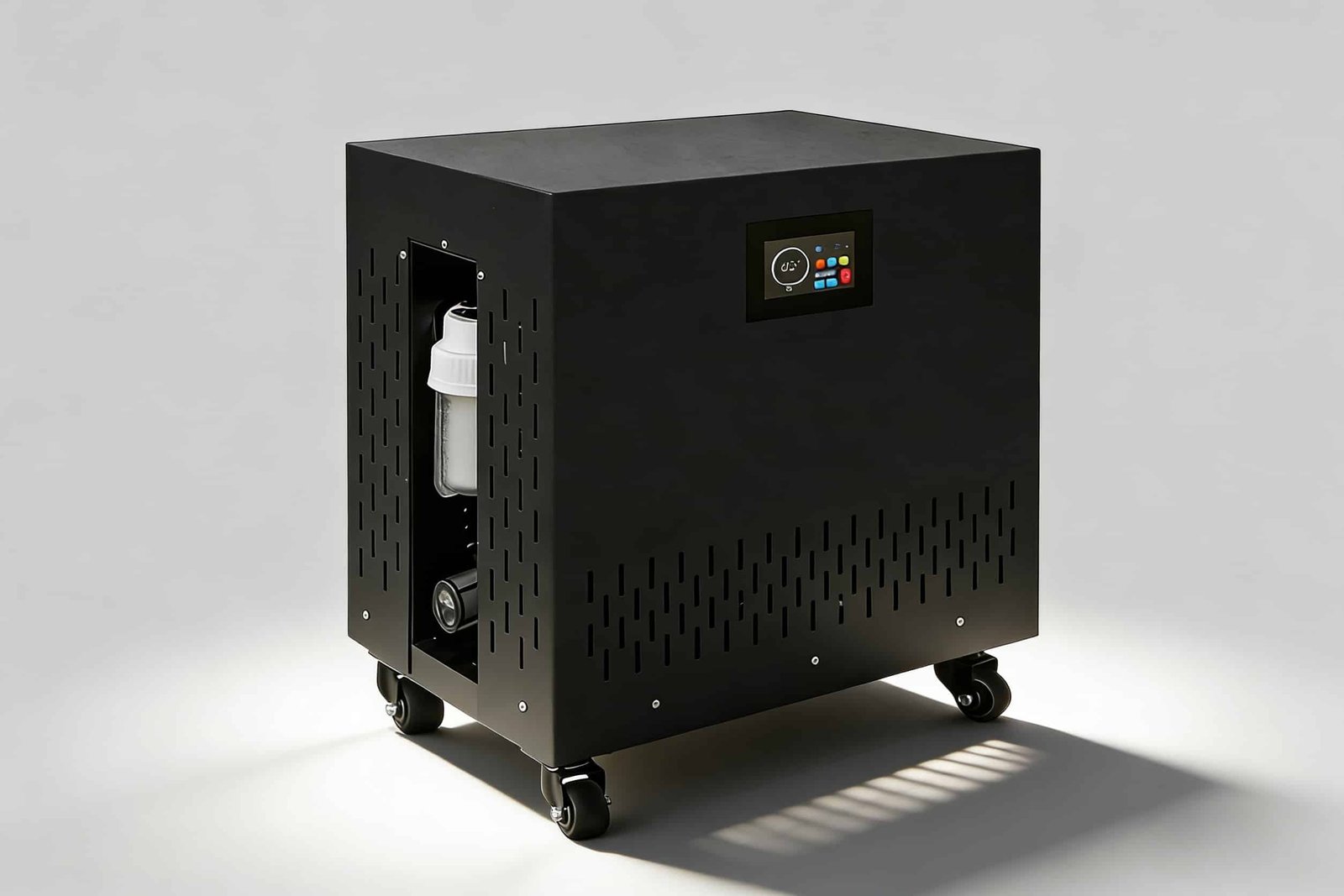
CHU-15-RV — 1.5HP Cold Plunge Chiller
The CHU-15-RV is for setups where 1HP is genuinely not enough — large volume tubs above 350 litres, outdoor installations in hot climates, or commercial facilities with multiple daily users. At 1.5HP it has the cooling capacity to handle these conditions without running continuously, which extends compressor life and keeps electricity costs reasonable relative to what a strained 1HP unit would consume doing the same job.
For a gym, hotel spa, or wellness centre running cold therapy as a service, this is the appropriate starting point. The WiFi control and ozone disinfection are standard, and the higher duty cycle rating means it is built for the kind of daily continuous operation that commercial use demands.
The Most Common HP Mistakes — And How to Avoid Them
Buying 0.5HP for an outdoor setup. Outdoor environments almost always have higher ambient temperatures than indoor spaces, and outdoor tubs are frequently uninsulated. A 0.5HP unit in an outdoor setup in a warm climate will run continuously and still struggle to reach 10°C. Start at 1HP for any outdoor installation.
Assuming more HP means colder water. It does not. Every OMNI Ice unit in this lineup reaches 0°C except the CH-08-RV. The difference is how fast it gets there and how easily it maintains temperature. Buying a larger unit does not change the end point — it changes the journey.
Ignoring the duty cycle. Consumer-grade chillers are designed for home use with moderate daily operation. Commercial-grade units are built for continuous operation. If you are running a facility with multiple sessions per day, a consumer unit operating beyond its duty cycle will fail earlier than expected.
Not accounting for future use. If you are setting up for personal use now but considering commercial use later, buy one HP level higher than your current requirement. The cost difference between a 1HP and 1.5HP unit is smaller than the cost of replacing the unit when your needs scale up.
Quick Decision Guide
| Your situation | Recommended model |
|---|---|
| Home use, indoor insulated tub under 200L, temperate climate | CHU-05-RV (0.5HP) |
| Bathtub setup, lightly insulated vessel, moderate warm environment | CH-08-RV (0.8HP) |
| Home or boutique gym, want heating + cooling, 200–350L | CHM-10-RV (1HP) |
| Maximum 1HP cooling power, outdoor or hot climate, 0°C target | CHU-10-RV (1HP) |
| Commercial facility, large tub, multiple daily users, hot climate | CHU-15-RV (1.5HP) |
Tell us your tub volume, location, and how many sessions per day you are planning, and we will give you a direct recommendation. We have seen every combination of setup conditions across 80+ countries — there is a right answer for your situation.
Frequently Asked Questions
Not Sure Which HP Is Right for Your Setup?
Send us your tub volume, location, and usage requirements and we will give you a direct recommendation. We manufacture all five models in this guide and supply factory-direct to gyms, wellness facilities, and individual buyers worldwide.