+8613417402517

Hello@coldtubchiller.com

Cold Plunge Equipment Guide

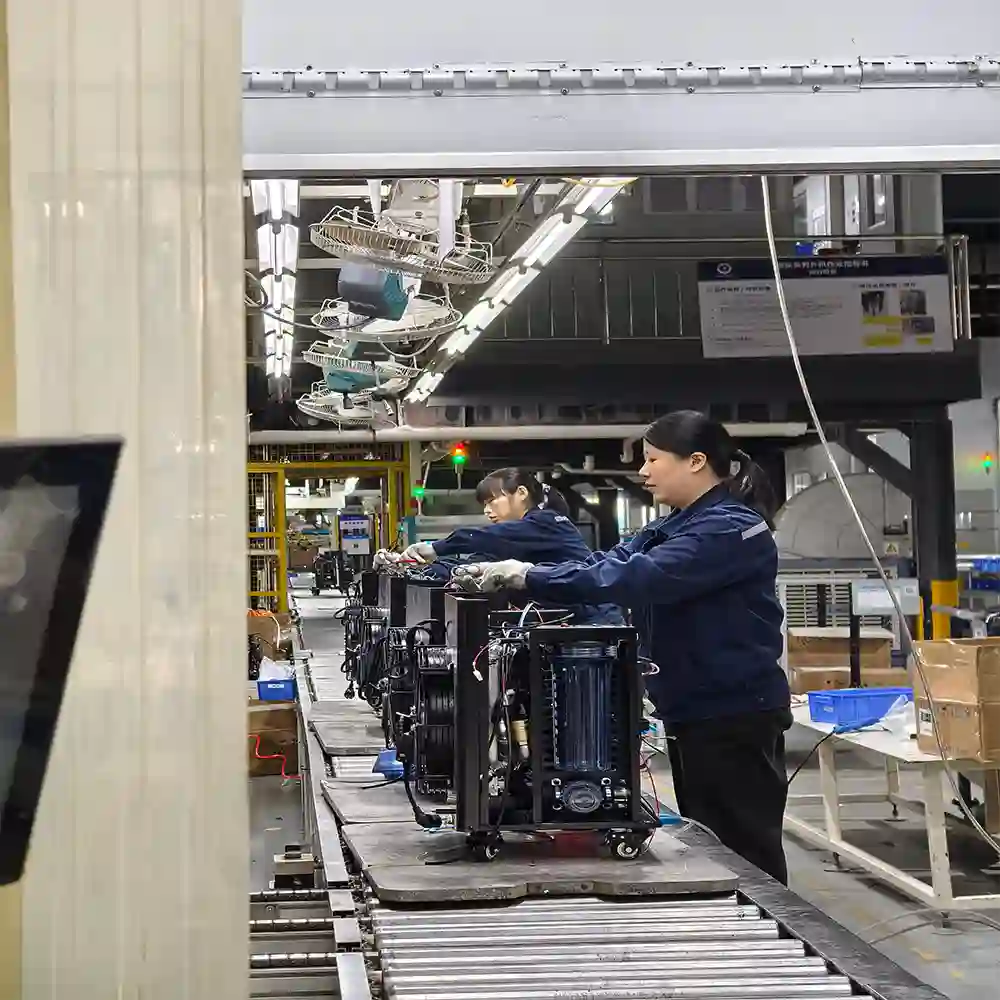
Multiple chiller production lines

Cold Plunge Chiller With Filter: The Complete Guide to Clean, Cold Recovery

Why a Filtered Cold Plunge Matters More Than You Think A  cold plunge chiller with filter is the perfect solution for those who want crystal-clear, icy water for recovery sessions. By combining powerful cooling with advanced filtration, it ensures every plunge is both refreshing and hygienic Cold water immersion has become one of the most discussed recovery methods in sports, wellness, and even mental health circles. But maintaining safe, crystal-clear water in your plunge is not just about keeping it cold — it’s also about effective filtration. In this guide, we’ll break down how a cold plunge chiller with filter works, why it’s essential, and how to select a system that meets your needs without compromising safety or efficiency. A cold plunge chiller with filter is the ultimate solution for keeping your plunge at 0–5°C while ensuring the water stays crystal-clear and hygienic. By combining advanced cooling technology with a built-in filtration system, it provides both optimal recovery conditions and long-term water safety. Today, cold water immersion is one of the most popular recovery methods in sports, wellness, and mental health. However, maintaining safe, clean water in your plunge isn’t just about lowering the temperature — it also requires effective filtration. In this guide, we’ll explain how a cold plunge chiller with filter works, why it’s essential, and how to choose the right system without compromising safety or efficiency. Many cold plunge owners focus only on water temperature — often aiming for 0–5°C (32–41°F) to maximize the physical and mental benefits. However, without filtration, your plunge can quickly become a breeding ground for bacteria, algae, and unpleasant odors. A built-in or external filter addresses three major concerns: Hygiene – Removes debris, skin cells, and contaminants that can accumulate after each session. Safety – Reduces harmful bacteria and prevents infections, especially for shared or commercial setups. Longevity – Keeps your chiller’s internal components free from buildup, extending its life span. According to CDC water hygiene guidelines, filtration combined with proper disinfection is the single most important factor in keeping water safe for repeated use. How a Cold Plunge Chiller With Filter Works A standard cold plunge chiller is designed to circulate water through a refrigeration system that drops the temperature to your desired range. When a filter is integrated, the process includes an additional filtration loop: Water Intake – A pump draws water from your plunge tub. Filtration Stage – Water passes through a cartridge or sand filter to remove particulates. Cooling Cycle – The chiller’s heat exchanger rapidly cools the filtered water. Return Flow – Clean, cold water is returned to the plunge tub. Some advanced units also feature UV-C or ozone disinfection, adding another layer of pathogen control. Choosing the Right Filtration Type for Your Plunge Filters are not one-size-fits-all. The choice depends on usage frequency, water volume, and budget. Cartridge Filters (PP Cotton / Paper) – Easy to replace, great for home setups. Sand Filters – Long-lasting and ideal for large commercial cold plunges. Multi-Stage Systems – Combine mechanical filtration with UV or ozone for maximum safety. For small to medium plunge tubs, a compact chiller and filter combo is often the most efficient option. Systems like the ones featured on our cold plunge chiller product page are designed for both personal and professional use. Temperature & Water Quality: Finding the Balance The sweet spot for recovery is 0–5°C, but colder isn’t always better if it means sacrificing water hygiene. Remember: If the water smells, feels slimy, or looks cloudy, temperature alone won’t make it safe. Daily or weekly filter maintenance can drastically reduce chemical treatment needs. High-usage setups (e.g., gyms, spas) should aim for continuous filtration rather than periodic cleaning. Energy Efficiency and Cost Considerations A cold plunge chiller with filter will naturally consume more power than a chiller alone, but you can minimize running costs by: Choosing an appropriately sized unit – Avoid oversizing for your water volume. Using insulated tubs and covers – Helps retain temperature, reducing compressor cycles. Scheduling run times – Use timers or smart controls to match usage patterns. In the long run, the extra filtration cost is outweighed by savings in water replacement and reduced wear on the chiller Installation Tips for Optimal Performance Place the chiller in a ventilated area to improve cooling efficiency. Ensure tight, leak-free connections between the plunge tub and chiller inlet/outlet. Mount the filter housing where it’s easy to access for cleaning or cartridge swaps. Consider adding a Wi-Fi control system for remote temperature and pump operation. If you’re unsure how to integrate filtration into your setup, our cold plunge systems page provides options that include both components in one streamlined package. Outbound Reference For further reading on water safety in cold therapy applications, visit Mayo Clinic’s guide on cold therapy. Maintenance: Keeping Your Plunge Fresh and Safe A well-maintained system not only protects users but also extends equipment life. Basic maintenance includes: Rinsing cartridge filters every few uses and replacing as needed. Checking pump and hose connections for blockages or leaks. Running a shock disinfection (chlorine or bromine) periodically for extra safety. Following the manufacturer’s cleaning schedule for the chiller’s internal components. Cold Plunge Chiller With Filter in Real-World Use In real-world use, a cold plunge chiller with filter is not just about cooling performance — it’s about how the system behaves over time. Different environments introduce different challenges. Home users care about low maintenance and clean water. Gyms and wellness centers must manage hygiene under high usage. Facilities need filtration systems that pass operational checks and reduce downtime. That’s why we’ve broken this topic into several focused guides, each addressing a specific real-world scenario — from daily hygiene and filtration logic to full facility-grade setups. The Bottom Line A cold plunge chiller with filter is not a luxury — it’s a necessity for anyone serious about recovery, whether at home, in a clinic, or in a commercial wellness center. By combining consistent low temperatures with effective filtration, you get the best of both worlds: the

Cold Plunge Chiller With Filter: The Complete Guide to Clean, Cold Recovery Read More »
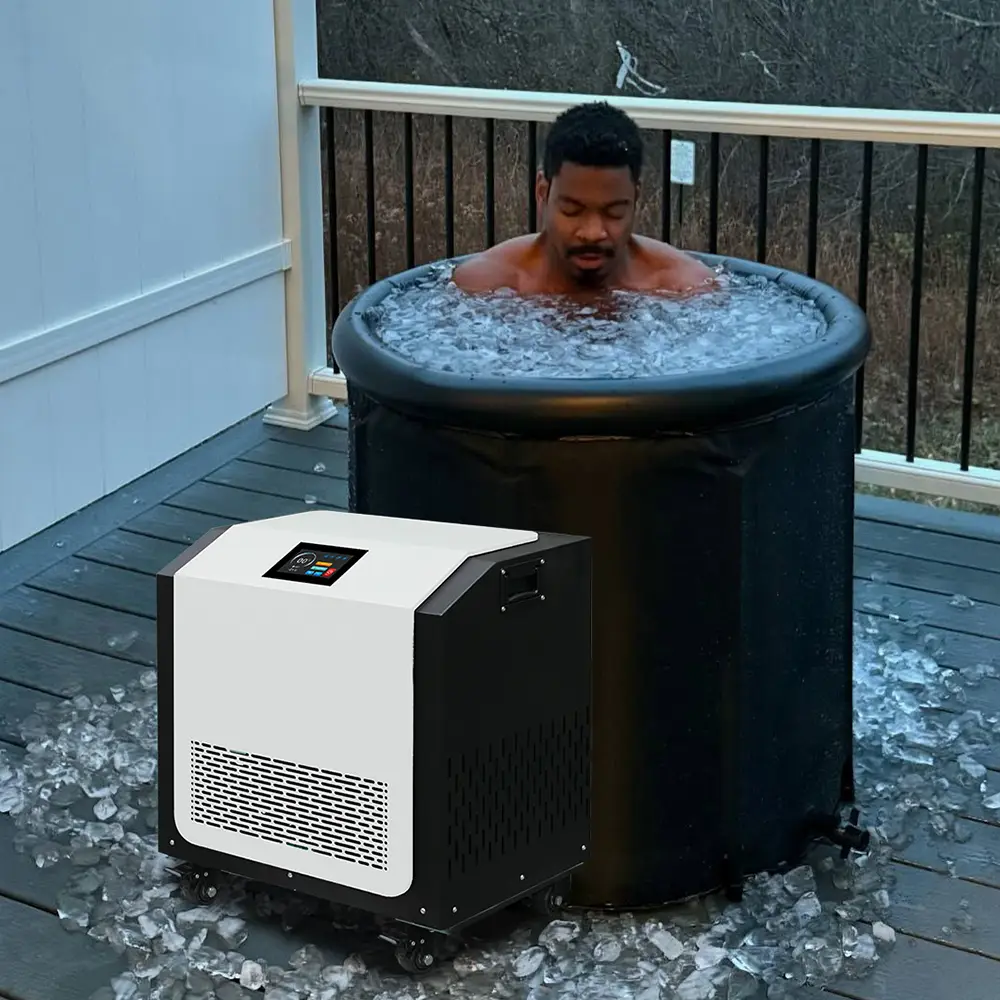
OMNI Therapy chiller system shown connected to a standard bathtub, demonstrating home-use compatibility for 0°C cold therapy

The Facility Playbook for a Cold Plunge Chiller + Filter (2025)

A cold plunge chiller and filter isn’t just a nice upgrade—it’s the difference between a novelty tub and an auditable, low-downtime recovery asset. In facilities where dozens of people cycle through daily, the winning installs do three things well: hit dose-controlled temperatures every time, keep water hygiene verifiable, and pass operational scrutiny (logs, standards, and safety). Public health guidance (MAHC) and product standards (NSF/ANSI 50) now make it practical to engineer small plunge systems with the same discipline as larger aquatic venues To understand how modern cold plunge systems integrate cooling, filtration, and hygiene into a single, reliable recovery solution, see our cold plunge chiller with filter complete guide.   What exactly is a “chiller + filter” loop—and why order matters A reliable loop looks like this: Tub → pre-filter (cartridge or sand) → circulation pump → chiller heat-exchanger → return to tub. Putting the filter before the chiller shields the heat-exchanger from grit and organic load, protecting cooling efficiency and extending seal/pump life. In higher-traffic environments, add UV or ozone as secondary disinfection. When components align with NSF/ANSI 50 (filters, pumps, UV, controllers, feeders), you’re working inside a well-understood performance envelope referenced by many health codes. nsf.orgThe ANSI Blog For a ready-matched kit approach, compare models under Cold Plunge Systems – Tubs,Chillers & Full OEM Combos and shortlist by volume, turnover, and serviceability. This loop logic—especially filter-first protection and turnover control—is explained in more detail in our complete guide to cold plunge chillers with filters, including sizing, hygiene standards, and real-world maintenance considerations. Dose the cold, not just the hype: evidence-based temperature × time Across recent reviews and meta-analyses, cold-water immersion (CWI) after exercise meaningfully reduces DOMS and perceived fatigue versus passive recovery. The most practical and repeatedly supported “dose band” is ~11–15 °C for ~10–15 minutes for soreness reduction; colder (5–10 °C) can shift biochemical markers but tends to be less tolerable day-to-day for teams. Program exposure around your training goals and avoid immediate CWI after hypertrophy-focused sessions if maximizing muscle growth is the priority Hygiene & compliance: what inspectors (and good operators) expect The Model Aquatic Health Code (MAHC) provides the logic behind turnover, disinfection, and records—principles that scale down to small plunge vessels when you want predictable water quality: Turnover: engineer flow so the vessel water is recirculated on a predictable schedule. Verified filtration: select filters with proven performance and size them to bather load and volume. Residuals & pH: keep measurable disinfectant residuals within pH ranges and log them. Documentation: keep filter maintenance, temperature, and chemistry logs—this is what resolves incidents fast. The Annex to MAHC details scientific rationale and helps you justify choices to stakeholders or authorities.  Need component signals of quality? NSF/ANSI 50 is the common reference for filters, pumps, UV, controllers, etc.; using certified components speeds procurement and supports inspections Engineer the loop: sizing that actually works 4.1 Turnover (circulation) Target 2–4 turnovers/hour for shared use. Example: a 400 L tub at 3 turnovers/hour → 1,200 L/h (~20 L/min) delivered after head loss through hoses, filter, and chiller. Use the pump curve, not just the nameplate. 4.2 Filtration Cartridge filters: straightforward service; for clarity and heat-exchanger protection choose ~5–20 µm elements; replace per differential pressure. Sand filters: robust for higher loads; backwash per spec when pressure rises. Secondary disinfection: UV or ozone reduces combined organics and smell in busy facilities—again, look for NSF/ANSI 50 alignment. nsf.org 4.3 Chiller capacity & controls Size HP to your volume and schedule so you consistently hit 11–15 °C inside the operational window without short-cycling. Controls: stable PID temperature control, flow/level alarms, anti-freeze/anti-dry-run protections. Power: 110/220 V to match site; ensure GFCI/RCD compliance. Placement: give the condenser adequate ventilation; heat-dumping in confined closets ruins performance. TCO/ROI: the filtered chiller wins on cash and uptime Assumptions (customize to your site): 400 L tub; drop 20 → 12 °C; one session/day. Ice method (latent heat): you melt about 40 kg of ice for the 8 °C drop; real use (door opens, human load, ambient heat) pushes daily ice closer to ~60 kg. At $0.30/kg, that’s $18/day ≈ $540/month ≈ $6,480/year. Chiller + filter: ~0.9 kW compressor × ~6 h/day ≈ 5.4 kWh/day. At $0.15/kWh, $0.81/day ≈ $292/year electricity. Filters/consumables ≈ $260/year. Annual delta: ~$6,000 saved. With a $1,200–$2,000 system, payback is typically 2–4 months, then you bank OPEX every month thereafter. Money aside, filtration preserves clarity, reduces complaints, and protects pumps/heat-exchangers—exactly what MAHC-style operational logic is meant to achieve Implementation blueprint: from survey to SOP Step 1 — Site surveyMeasure vessel volume; map an equipment pad with drainage; confirm power, ventilation, and hose runs. Step 2 — Loop designPick cartridge vs. sand; size pump for target turnover; confirm hose diameters/quick-disconnects; add check valves where needed. Step 3 — Controls & safetySet PID control with lockouts; verify flow/level sensors; GFCI/RCD; anti-freeze; audible alarms. Step 4 — CommissioningLeak test; verify flow in LPM and ΔT; record time-to-target temperature; set filter change thresholds by differential pressure. Step 5 — SOP + logsDaily: temperature, disinfectant residual, pH. Weekly: rinse/ backwash; check hoses/unions. Monthly: replace cartridges (or earlier if ΔP threshold is hit). Keep a single-page incident response for cloudy water/odor. Want a factory-grade starting point? Compare OEM-matched kits under Cold Plunge Systems – Tubs, Chillers & Full OEM Combos, then step up to a fully custom loop via our ice bath chiller manufacturer hub. Five common failure modes (and how the filter prevents them) Filter placed after the chiller → debris fouls the heat-exchanger first; efficiency tanks. Undersized filter area → high ΔP, cavitation, seal wear, and nuisance shutdowns. Ignoring head loss → delivered flow misses turnover target; chemistry “dead zones.” No secondary disinfection at high load → cloudy water and odor despite decent filtration. No records → you can’t diagnose trends or pass audits; MAHC-style logs fix this. Buyer’s checklist (copy into your RFQ) Chiller: capacity vs. volume; time-to-target; ±0.5 °C stability; noise; power; alarms; placement ventilation.Filter: micron rating; effective area; pressure gauges; service method (backwash vs. replace); spare parts availability.Turnover:

The Facility Playbook for a Cold Plunge Chiller + Filter (2025) Read More »

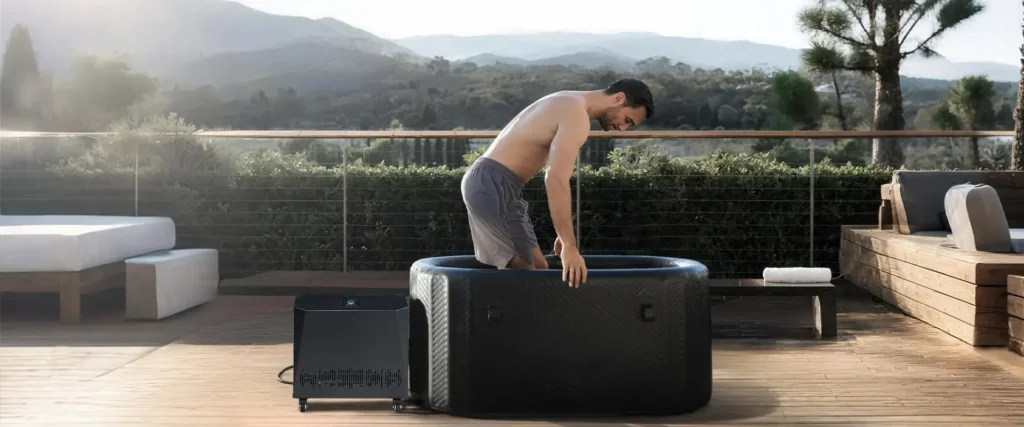
OMNI Therapy CHU-10-RV model chiller unit, designed for 0°C ice bath recovery, placed beside an outdoor soaking tub

Thinking About a Sun Home Cold Plunge? Here’s a Smarter Alternative

Cold plunging has gained significant popularity as people discover its potential health benefits—from improved recovery and reduced inflammation to enhanced mental clarity. Sun Home Cold Plunge tubs, in particular, have gained attention, offering stylish aesthetics and a luxurious branding approach. However, before investing in a costly and space-consuming tub, it’s worth considering a smarter, more practical solution that achieves the same ice-cold benefits with greater flexibility and lower overall investment. Why Sun Home Cold Plunge Is Attracting Attention Aesthetic Appeal vs. Practical Use Sun Home tubs have become appealing primarily due to their sleek design and prominent marketing. These aesthetically pleasing plunge tubs fit well in premium home environments and are often showcased prominently on social media, which significantly boosts their popularity. Marketing vs. Reality: What Users Really Experience However, what often goes unnoticed in initial attraction is how practical these tubs really are for day-to-day use. While undeniably attractive, many users later realize the limitations—such as permanent installation, high maintenance, and significant upfront costs. Limitations of Traditional Cold Plunge Tubs Bulky, Immobile Design One of the largest challenges with Sun Home or similar plunge tubs is their bulky and immobile design. Once placed and installed, moving them becomes difficult or even impractical, particularly for people living in apartments or rented spaces. If your circumstances change or you simply wish to rearrange your space, the lack of mobility can become a serious inconvenience. High Cost of Entry Premium tubs like Sun Home Cold Plunge often carry a significant price tag. For those still experimenting with cold plunge therapy or unsure about long-term commitment, this large initial investment can seem disproportionate, especially when equally effective alternatives exist. Achieving 0°C Isn’t Exclusive to Expensive Tubs Contrary to popular assumption, reaching near-freezing water temperatures (0°C) isn’t exclusive to expensive plunge tubs. High-performance chillers, often overlooked, can offer equally effective cold therapy at a fraction of the price and with significantly greater versatility. A More Flexible Solution: OMNI Therapy’s Cold Plunge Chiller Compact and Portable Advantage Instead of committing space and resources to a bulky tub, consider OMNI Therapy’s CHU-10-RV Cold Plunge Chiller. This system is mobile and compact, allowing users the flexibility to position their setup indoors, outdoors, or even transport it between locations effortlessly. Its built-in wheels and ergonomic handles provide unmatched convenience. Significantly Lower Costs Price-wise, OMNI Therapy’s cold plunge chillers offer substantial savings compared to standalone plunge tubs. By integrating seamlessly with existing home bathtubs or smaller basins, you significantly cut down your initial and ongoing expenditures, making regular cold plunging much more economically feasible. Seamless Integration with Your Existing Bathtub Another compelling advantage of a cold plunge chiller is its compatibility with your existing bathtub. OMNI Therapy’s CHU-10-RV chiller easily attaches to standard tubs, efficiently cooling water to 0°C, ensuring you enjoy professional-grade cold therapy without the redundant investment in another large piece of equipment. Learn more about this solution on its dedicated product page. Why Choose OMNI Therapy for Cold Plunge Systems Reliable Performance and Advanced Functionality OMNI Therapy stands out for delivering superior cooling performance combined with advanced functionality, such as ozone sterilization and built-in filtration. These features ensure clean, safe water, while consistent temperature control guarantees a reliable cold plunge experience every time. As a trusted ice bath chiller manufacturer, OMNI Therapy focuses on real-world performance, not just aesthetics. Its mobile chillers are designed to meet the needs of both home users and professional recovery settings. Built-in Filtration and Smart App Control Unlike many standalone tubs, OMNI Therapy chillers include smart features like mobile app control, allowing scheduling and remote monitoring of water temperature. The built-in filtration significantly reduces maintenance tasks, keeping the water fresh without frequent manual interventions. Proven Track Record in Cold Therapy Solutions With a strong track record of reliability and user satisfaction, OMNI Therapy’s chillers have become trusted solutions for both individual home users and commercial wellness facilities. The system’s reliability and user-friendly design make it a preferred choice among cold plunge enthusiasts. Health Benefits and Safety of Cold Plunging Supported Health Benefits According to Medical Experts Cold plunging has been endorsed by various health experts for its potential to: Enhance recovery by reducing muscle inflammation and soreness. Promote better mental health by increasing resilience to stress. Support cardiovascular health by improving circulation. While research is ongoing, initial findings and anecdotal experiences strongly support these benefits, making cold plunging a valuable addition to wellness routines. How to Practice Safe and Effective Cold Therapy Medical professionals from reputable organizations, such as the Cleveland Clinic, emphasize the importance of gradually introducing yourself to cold therapy. They recommend keeping plunge sessions short initially and maintaining safe temperatures (generally between 10°C–15°C initially, gradually reducing to 0°C as tolerance improves). Making an Informed Choice for Your Cold Plunge Setup Consider Your Actual Needs, Not Just the Marketing While Sun Home Cold Plunge tubs have enjoyed significant marketing-driven visibility, it’s critical to assess whether such a large, stationary, and costly investment truly matches your lifestyle and goals. Aesthetics and popularity alone should not overshadow practical daily usage, mobility, maintenance, and overall cost-effectiveness. Why a Chiller System Might Be the Smarter Investment If your goal is a convenient, affordable, yet highly effective solution, OMNI Therapy’s CHU-10-RV cold plunge chiller is undoubtedly worth considering. Its superior flexibility, affordability, and advanced features position it as a wise choice for users who value practicality alongside performance. Ultimately, when selecting a cold plunge system, the smartest approach is one guided by real needs and long-term satisfaction rather than short-term popularity. With OMNI Therapy, you ensure your plunge journey is both practical and fulfilling.

Thinking About a Sun Home Cold Plunge? Here’s a Smarter Alternative Read More »

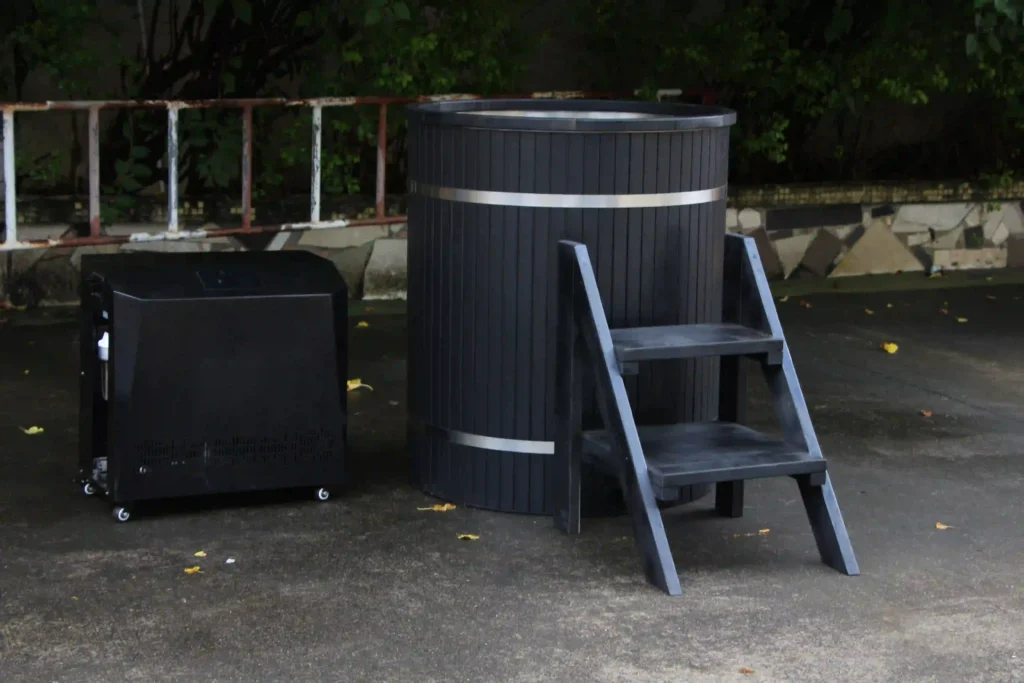
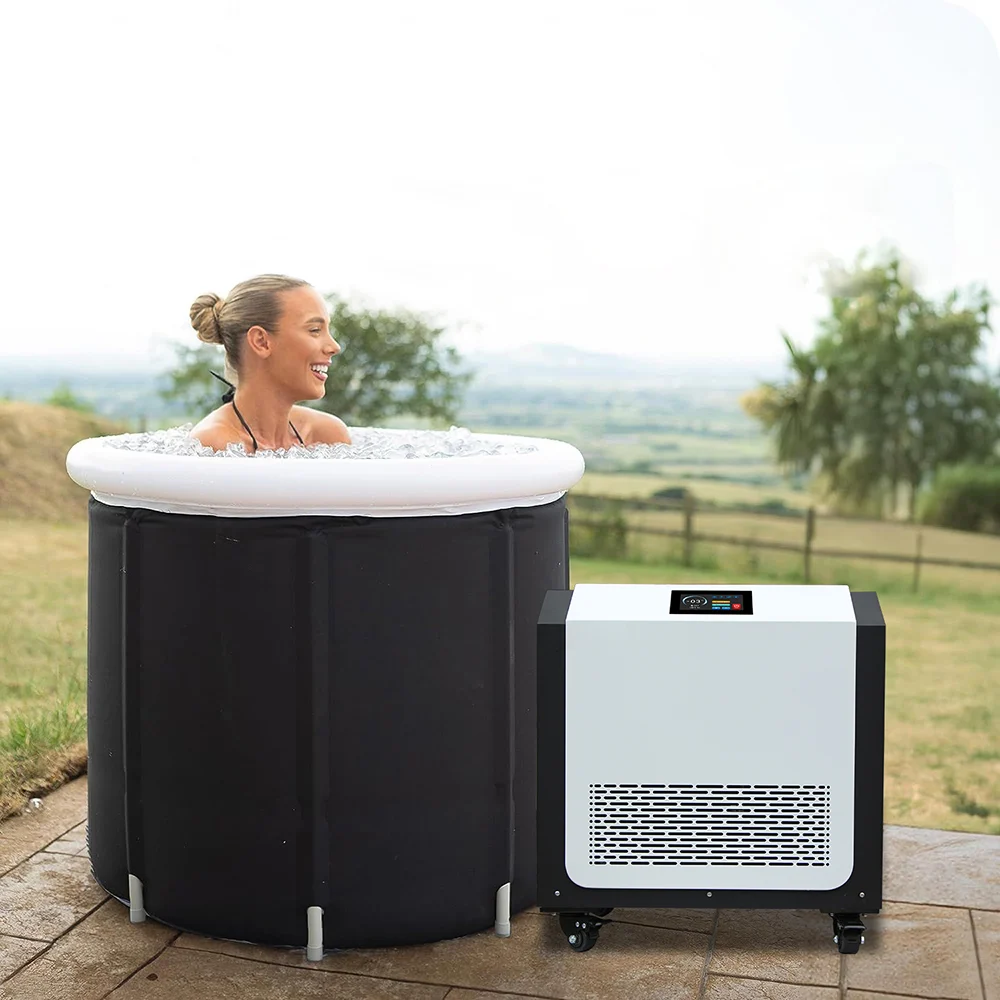
Inflatable cold plunge tub connected to 1HP home-use chiller

How to Choose the Right OEM Cold Plunge Chiller Supplier for Your Business

As the demand for cold water immersion therapy continues to surge among wellness clinics, gyms, and high-performance recovery centers, the need for reliable OEM cold plunge chiller suppliers is becoming more critical than ever. Choosing the right supplier isn’t just about price—it’s about ensuring long-term performance, seamless integration, and the ability to scale your brand with confidence. Whether you’re launching a private-label recovery product line or sourcing chillers for a commercial setup, here’s how to evaluate the right OEM cold plunge chiller supplier for your business. Define Your Application Needs First Before shortlisting suppliers, clearly define how and where the cold plunge chiller will be used: Is it for a home-use ice bath tub, or a commercial-grade cold plunge facility? Do you need WiFi app control, integrated filtration, or even ice-making capability? What’s your target temperature range and cooling time expectations? Knowing your technical requirements up front helps you filter out suppliers who can’t meet your baseline specs. Evaluate Their Technical Capabilities A serious OEM supplier should provide chillers that: Operate efficiently in 0°C to 40°C ranges Feature reliable temperature control (±0.5°C tolerance) Include integrated filters or allow external filtration systems Use quality refrigerants like R32 or R410A Offer options for 110V/220V dual voltage Ask for detailed technical datasheets, not just marketing brochures. You want engineering-grade specs. Understand Their OEM & Customization Support Not all suppliers are equipped for true OEM collaboration. A high-quality OEM cold plunge chiller supplier should offer: Custom logo placement, control panel branding, and packaging Support for white-label dropshipping Custom design for cabinet materials, color, and casings Flexible MOQ (Minimum Order Quantity) for pilot batches Also ask how many OEM clients they’ve served and request reference samples. Inspect Certifications and Export Experience For international distribution, your OEM supplier must meet global safety and environmental standards. Look for: CE, RoHS, or ETL certifications Factory audits and ISO9001 compliance Experience shipping to North America, Europe, or Australia Ability to provide HS codes, customs documentation, and insurance These factors not only reduce your risk but improve your import compliance and customer trust  Your OEM supplier must meet global safety and environmental standards such as CE or RoHS. You can learn more about CE certification requirements here Ask About After-Sales and Technical Support Even the best machines need support. A trustworthy supplier should provide: User manuals and installation guides in your language Troubleshooting videos for filter replacement, screen operation, and first use Responsive technical service team (WhatsApp, email, or WeChat) Spare parts availability and quick dispatch Reliable post-sale service is often what separates good suppliers from great ones  Don’t Forget Lead Time, MOQ, and Production Capacity As you scale, can your supplier keep up? What’s their average lead time for 20, 100, or 500 units? Can they handle urgent orders or container loads? Do they support mixed SKUs in a shipment? What is the MOQ for custom chillers? These answers help you align your procurement plan with their production rhythm Why OMNI Therapy May Be the Right Partner Frequently Asked Questions At OMNI Therapy, we specialize in high-performance cold plunge chillers tailored for OEM clients worldwide. Our systems feature: WiFi app control and smart operation Powerful chillers reaching 0°C, even capable of ice-making Filtration, ozone disinfection, and CE-certified components Custom branding options, global logistics, and technical support Whether you’re building your own wellness brand or upgrading your facility, we have the capacity, precision, and service to support your long-term vision. 👉 Learn more about our ice bath chiller manufacturer solutions   Q: Can I request a fully custom housing or shell?Yes, we support OEM plastic, stainless steel, or WPC casing customization with logo engraving or color matching. Q: Do you provide dropshipping or direct fulfillment?We can offer flexible packaging and labeling for your brand and deliver to a 3PL or warehouse of your choice. Q: Are your chillers suitable for outdoor use?Yes, all of our units are weather-resistant and designed for continuous operation in both indoor and outdoor settings. Q: What’s your average lead time?For stock models, lead time is 7–10 days. For custom orders, 15–25 days depending on quantity and complexity. Final Thoughts Choosing the right OEM cold plunge chiller supplier is a decision that directly affects your product performance, customer satisfaction, and brand reputation. Invest time in evaluating their technical capabilities, export experience, and support infrastructure. If you’re ready to work with a factory that blends engineering precision with OEM flexibility, contact OMNI Therapy today. 📩 Get in Touch or browse our OEM-ready chillers.

How to Choose the Right OEM Cold Plunge Chiller Supplier for Your Business Read More »

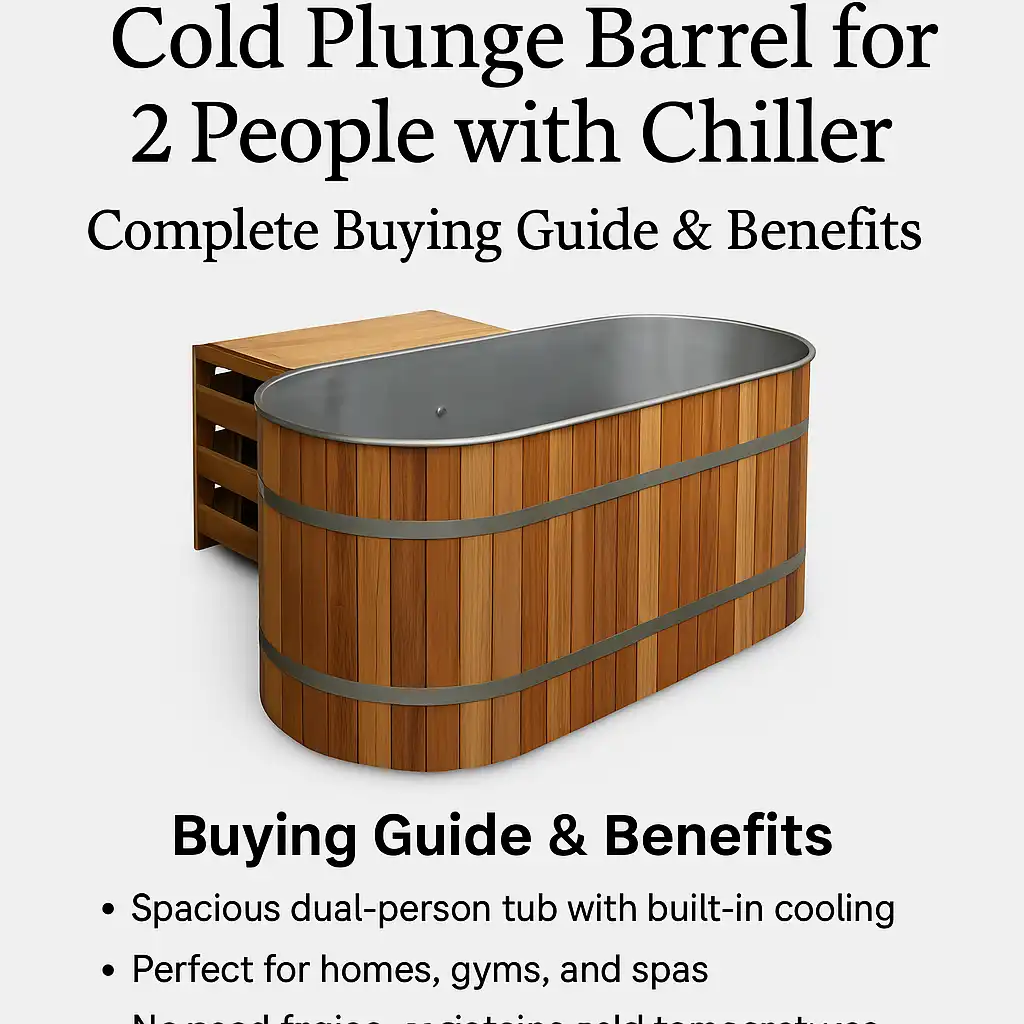
Smart cold plunge chillers mobile app interface for remote cooling schedule

Water Chiller and Heater for Cold Plunge: A Dual-Mode Recovery System Explained

In the field of recovery therapy, combining both cooling and heating functionalities in a single system offers unmatched adaptability. A water chiller and heater for cold plunge supports not only traditional cold immersion therapy but also thermal therapy—making it suitable for year-round use across a variety of professional and home environments. Why Dual-Temperature Control Matters Cold plunge alone has proven benefits, such as reducing muscle soreness and promoting mental clarity. However, adding heating capability to the same system introduces an additional layer of physiological value through contrast therapy. This method—alternating between hot and cold immersion—has been supported by peer-reviewed studies as a tool for improving blood flow, vascular function, and neuromuscular recovery. Mode Typical Temperature Clinical Effects Cold Plunge 0–5°C Anti-inflammatory, post-exercise recovery Hot Soak 38–42°C Muscle relaxation, circulation enhancement Contrast Use Alternating modes Vascular training, improved nervous system resilience Key Features of an Effective Cold Plunge Heating & Cooling System If you’re evaluating equipment for cold plunge therapy with both heating and chilling, consider the following performance characteristics: Temperature Range: Minimum 0°C and maximum at least 40°C Compressor Power: 1HP or more for volumes ≥300L Built-in Heater Material: Preferably titanium or stainless steel to prevent corrosion Control Interface: Digital panel or app-based remote adjustment Integrated Filtration: Essential for hygiene and pump protection For a detailed breakdown of system mechanics and refrigerant cycles, refer to our article on how a cold plunge chiller works. Product Example: CHU-10-RV with Hybrid Barrel WT-05 One of the most effective dual-mode configurations in our lineup is the CHU-10-RV chiller-heater paired with the WT-05 hybrid cold plunge tub. CHU-10-RV Technical Highlights: Cooling Power: 1HP (suitable for 300–500L water volume) Temperature Range: 0°C to 40°C Features: WiFi control, ozone disinfection, integrated filter and heater Power Supply: 110V or 220V models available WT-05 Barrel Tub Characteristics: Structure: 304 stainless steel liner, WPC outer shell Accessories: Foam lid, red cedar footstep Capacity: Approx. 300L Suitable for: Indoor or covered outdoor use This combination is widely used by home wellness users, physiotherapy clinics, and boutique gyms, and is available in our cold plunge chiller series. Outdoor Compatibility Considerations Many cold plunge tubs and heater-chiller units are now designed for partial or full outdoor operation. To ensure safe outdoor use: Protect the unit from rain with a shelter or waterproof cover Use an IP-rated socket with proper grounding Monitor ambient temperature ranges to ensure heating/cooling efficiency Detailed installation instructions for outdoor environments are available in our setup guide. Scientific Context and External Support Modern research supports both cold water immersion and contrast therapy as effective tools for post-exercise recovery. For broader clinical insights, consider these authoritative resources: NCBI: Effects of Cold Water Immersion on Recovery Healthline: Ice Baths vs. Heat Therapy Sauna Times: Physiological Benefits of Contrast Bathing These sources validate the multi-functional use of water chillers and heaters in evidence-based recovery protocols. Build Your Own System Our homepage offers a full view of available cold plunge tubs, heater-chiller units, and bundled solutions. If you’re unsure about sizing or installation, feel free to contact us for technical support and personalized recommendations.

Water Chiller and Heater for Cold Plunge: A Dual-Mode Recovery System Explained Read More »

Request A Quote

We look forward to receiving your request information and we will be in touch with you within 48 hours!