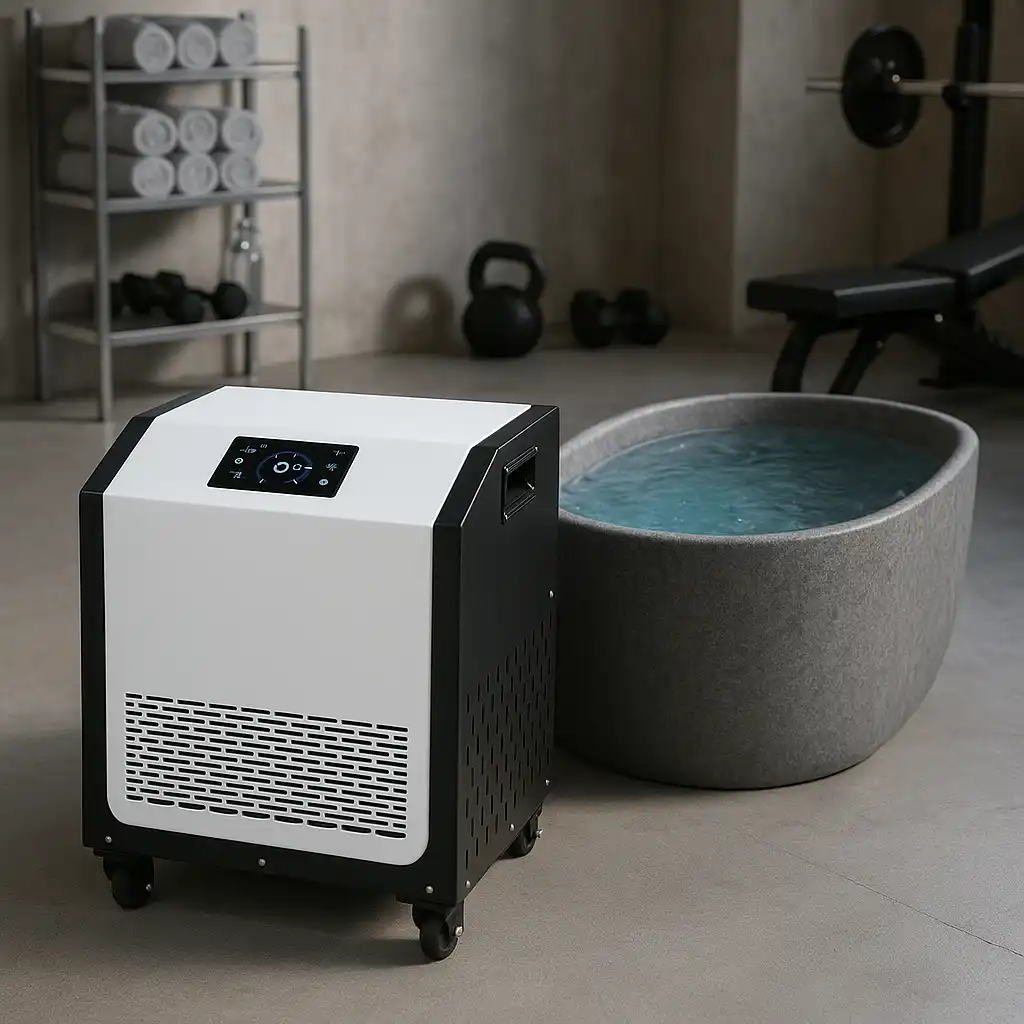
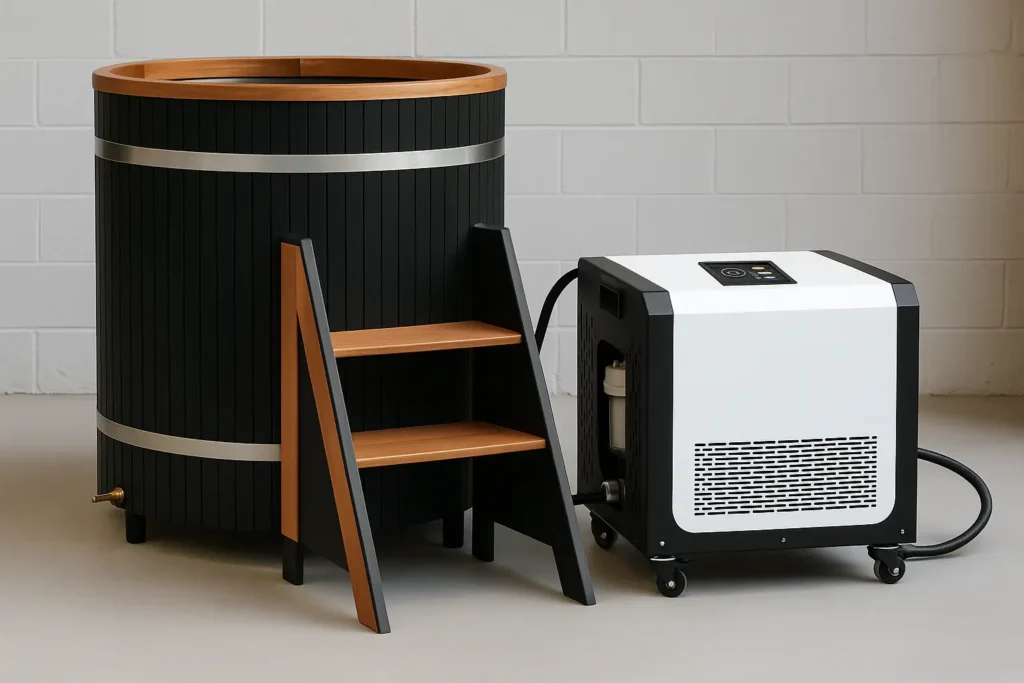
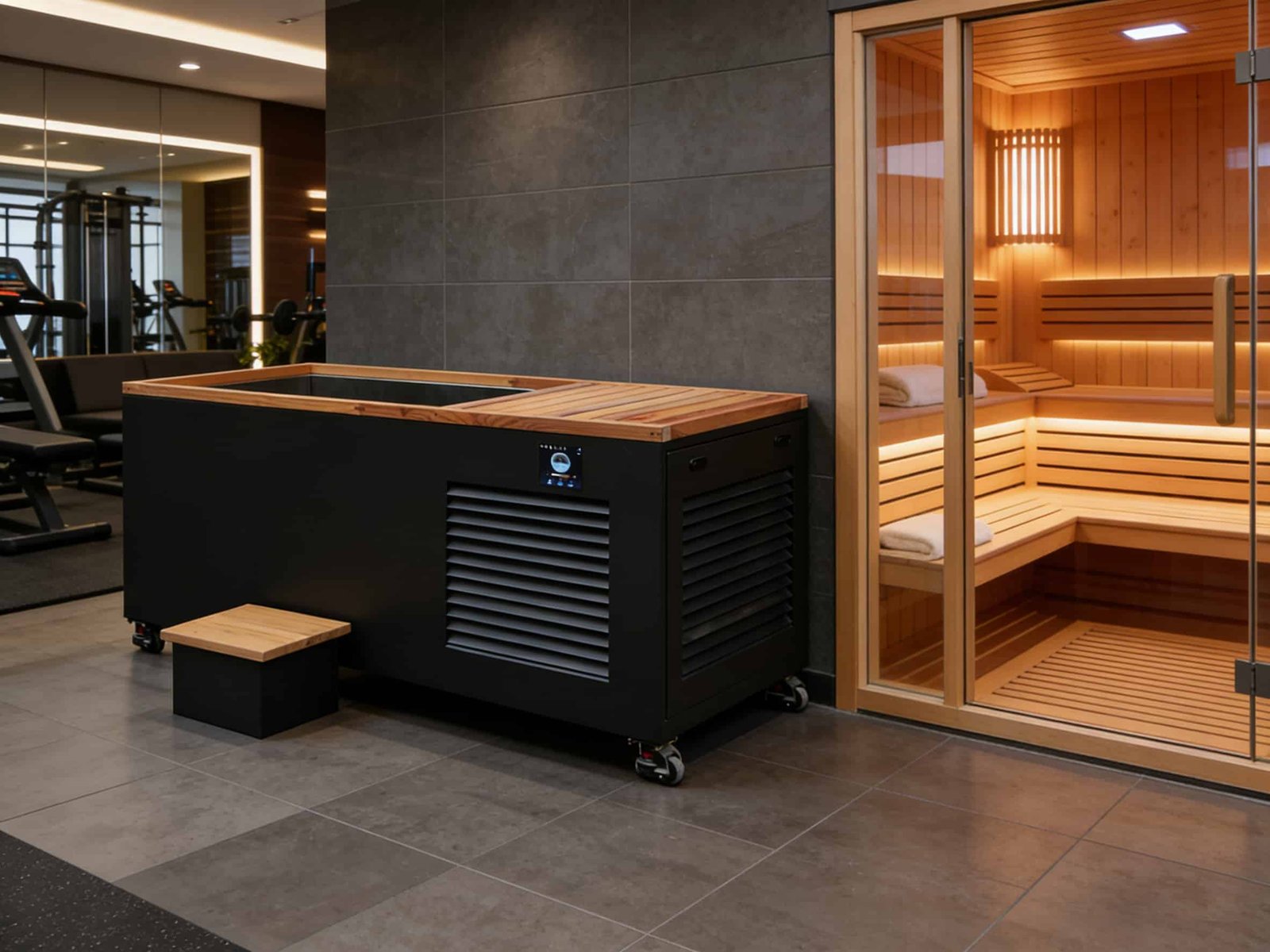
 Building a DIY cold plunge chiller setup has never been more accessible — but most guides skip the part that matters most: choosing the right components for your specific tub size and climate. Get this wrong and you end up with a chiller that runs for six hours to drop the water five degrees. Get it right and you have a system that holds 39°F (4°C) around the clock, costs a fraction of a pre-built unit, and lasts for years.
This guide covers every component you need, how to size your cold plunge chiller correctly, how to connect everything, and the most common mistakes that turn a DIY build into an expensive headache. Whether you are working with an inflatable tub, a stock tank, or a custom vessel, the same principles apply.
Why Build a DIY Cold Tub Cold Plunge Chiller System?
The pre-built cold plunge market has exploded in the last three years. Brands like Plunge, Ice Barrel, and dozens of others now sell complete systems — but the price tags reflect it. A branded cold plunge with a built-in chiller routinely costs between $3,500 and $8,000. For a gym owner or serious home user who understands the components, that number is hard to justify.
A well-built DIY cold tub cold plunge chiller system using commercial-grade parts typically costs between $900 and $2,200 depending on tub size and chiller HP. The performance is identical. In many cases, because you are selecting components independently, the build quality is actually higher than mass-market consumer units.
The other advantage is repairability. When a branded system fails outside its warranty window, you are often looking at proprietary parts and expensive service calls. A DIY build uses standard components — chillers, pumps, filters — that can each be serviced or replaced independently without touching the rest of the system.
DIY vs Pre-Built: Cost Breakdown
| Component | DIY Cost (est.) | Pre-Built Equivalent |
|---|---|---|
| Cold plunge tub (100 gal acrylic) | $300–$600 | $3,500–$8,000 Complete system |
| 1HP water chiller | $400–$900 | |
| Circulation pump | $60–$120 | |
| Filter system | $80–$180 | |
| Hoses, fittings, insulation | $60–$120 | |
| DIY Total | $900–$1,920 |
The math is straightforward. Even at the high end of the DIY range, you are saving $1,500 to $6,000 compared to a premium branded system. That gap widens further when you factor in that commercial-grade DIY components often outlast consumer-grade all-in-one units.
What You Need: The Complete DIY Cold Plunge Chiller Kit List
A complete cold plunge chiller kit has five core components. Every single one matters. Skipping or underspecifying any one of them creates problems that are frustrating to diagnose after the fact.
1. The Cold Plunge Tub
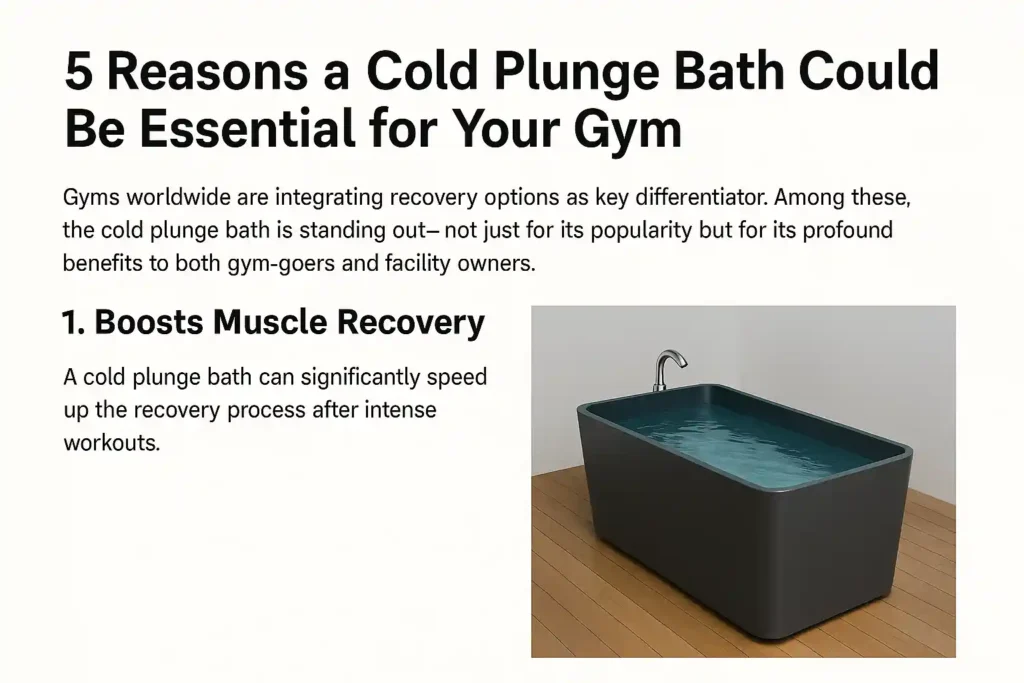
Your tub determines everything downstream — chiller HP, pump flow rate, and filter sizing. The three most common materials for DIY builds are acrylic, stainless steel, and inflatable vinyl.
Acrylic tubs offer excellent insulation and a clean aesthetic. They are the most popular choice for home gyms and indoor setups. A quality acrylic cold plunge tub in the 80–120 gallon range is the ideal starting point for most single-user systems.
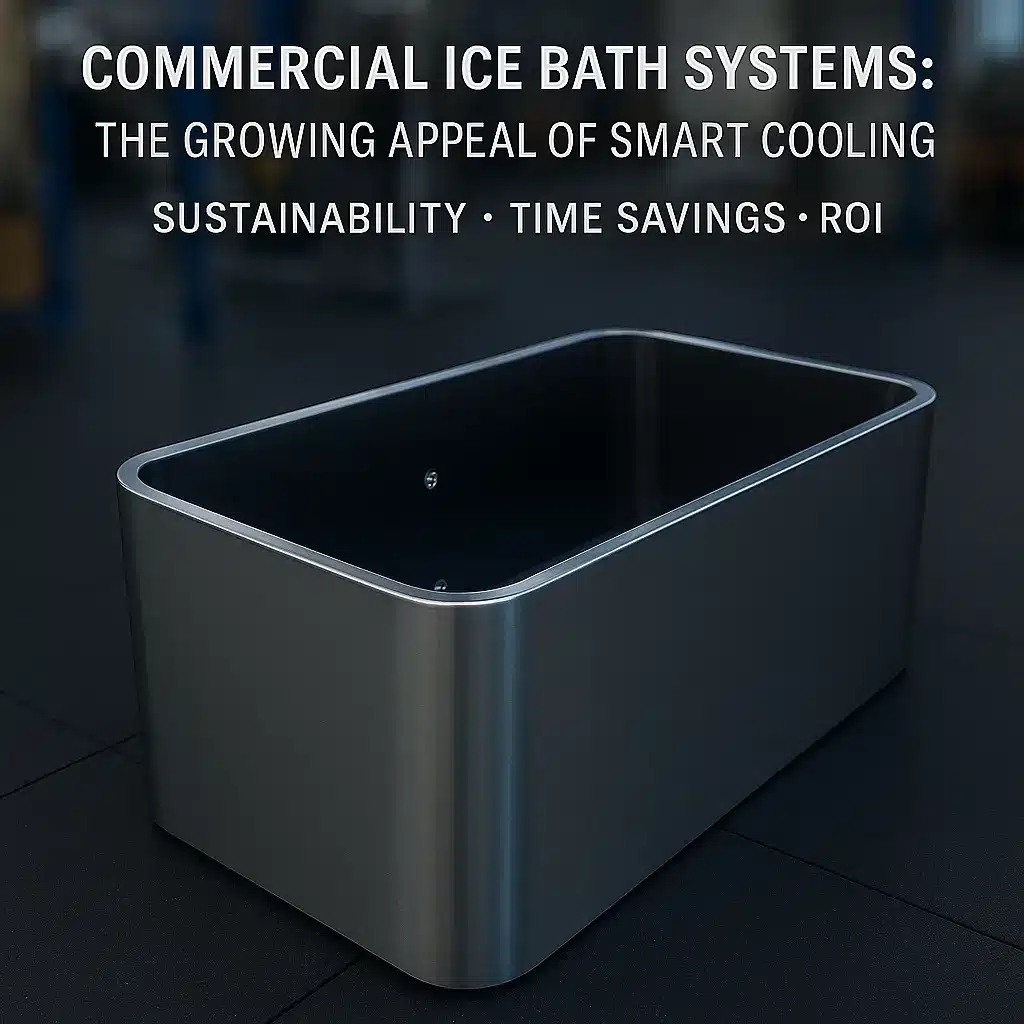
Stainless steel is the commercial standard. A stainless steel cold plunge tub handles daily multi-user traffic, is easy to sanitize, and does not degrade over time. The trade-off is lower insulation — your chiller will work harder in warm climates.
Inflatable tubs work well for users who need portability or are testing the concept before committing. A good inflatable ice bath tub with thick walls can hold temperature reasonably well when paired with the right chiller. Just be aware that thin-walled inflatables will require a more powerful unit to compensate for heat transfer.
For most DIY builds, a 80–130 gallon tub is the sweet spot. Large enough for full immersion, small enough for a 1HP chiller to manage efficiently.
2. The Water Chiller
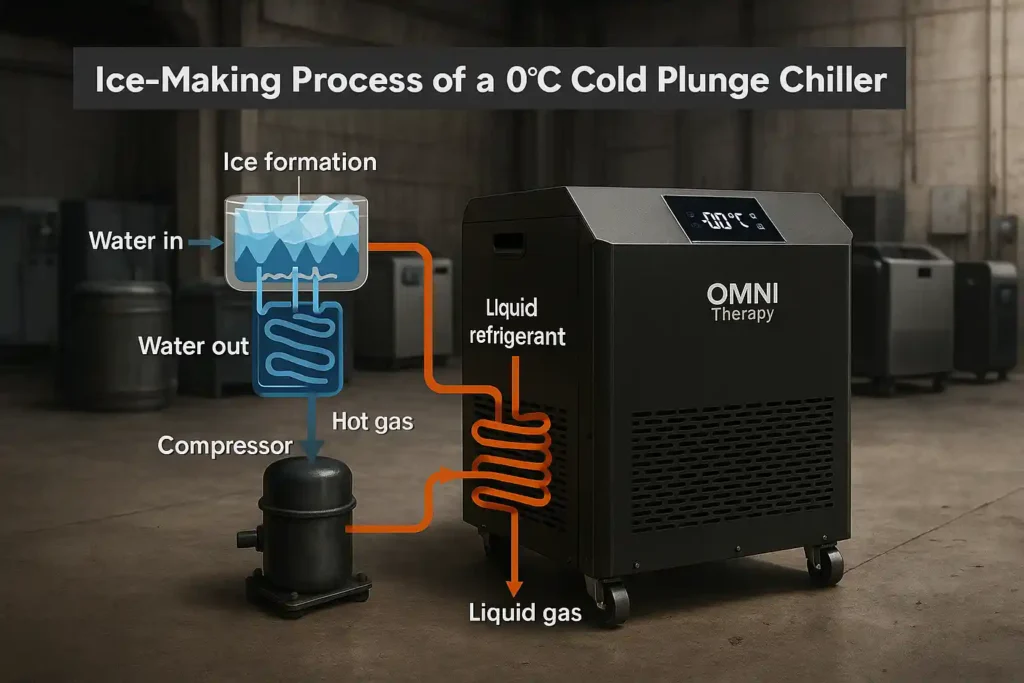
This is the heart of the system. The chiller pulls heat out of the water and exhausts it into the air, maintaining your target temperature continuously. Choosing the wrong chiller HP is the single most common and most expensive mistake in DIY builds. We cover HP selection in detail in the sizing section below.
For commercial-grade reliability in a DIY context, factory-direct chillers offer the best value. You get the same industrial compressor and refrigeration components used in professional facilities, without the brand premium. The cold plunge chiller lineup from OMNI Ice, for example, covers 0.5HP through 2HP with CE and ETL certification — the same compliance standards required in commercial facilities.
3. The Circulation Pump
The pump moves water from the tub through the chiller and back. Most chillers do not include a pump — you select one separately based on your plumbing distance and tub volume. A standard 80–130 gallon build needs a pump with 800–1,200 GPH flow rate. Higher is not always better; excessive flow can cause turbulence that reduces the chiller’s efficiency.
Pump placement matters. An external inline pump gives you better flow control and is easier to service than a submersible. For troubleshooting common pump issues after your build is running, see our cold plunge pump troubleshooting guide.
4. The Filter System
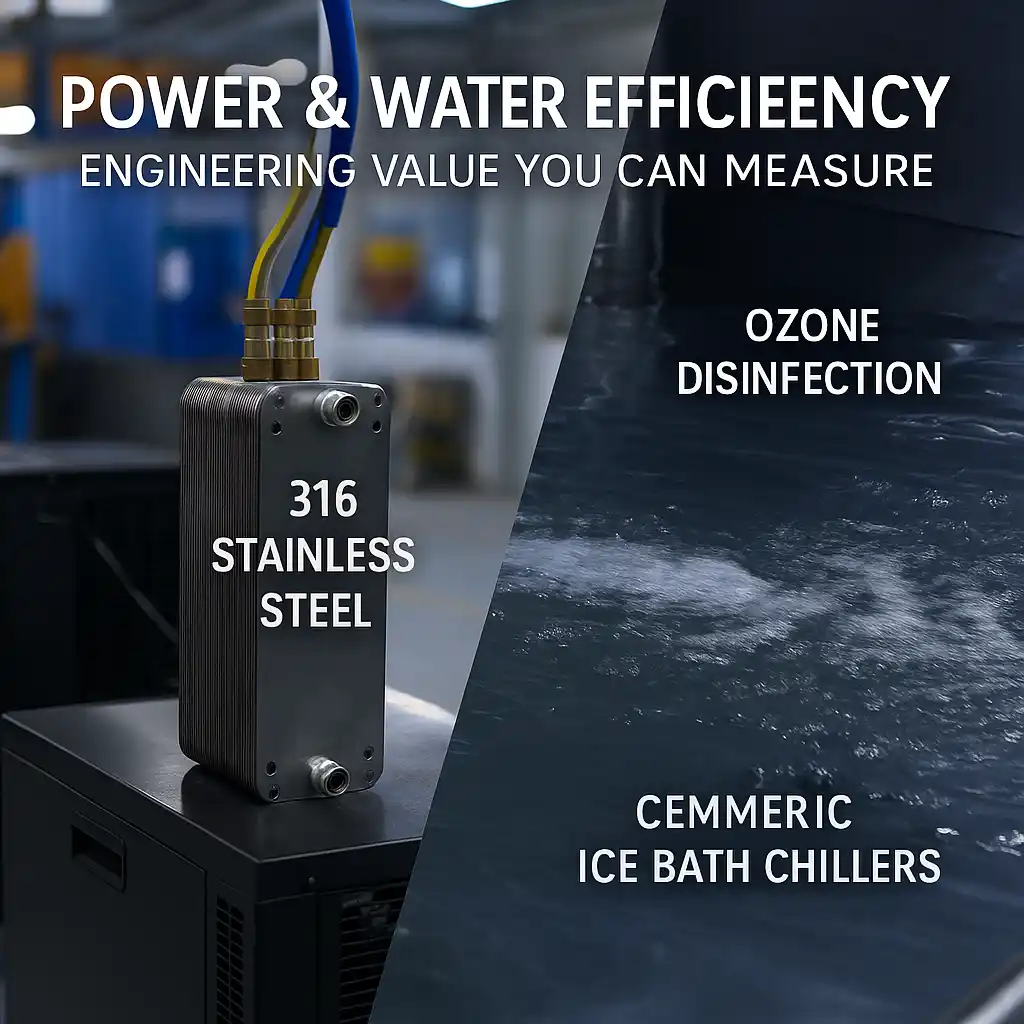
Cold water — especially below 10°C — does not sanitize itself. Without filtration, a cold plunge develops biofilm, algae, and bacterial growth within days. A proper cold plunge chiller filter setup removes particulates and, when combined with an ozone or UV sanitation stage, eliminates pathogens entirely.
The minimum viable filter for a single-user home build is a 10–20 micron cartridge filter with a bypass valve. For multi-user setups, a dual-stage system with a pre-filter and a fine cartridge stage is standard. For detailed filtration configurations and maintenance schedules, read our complete chiller filter setup guide.
The CDC water sanitation guidelines recommend filtration and disinfection for any shared therapeutic water system. For personal use, filtration alone is adequate if you change the water every 5–7 days.
5. Hoses, Fittings & Insulation
Use food-grade reinforced PVC hose — at least 3/4 inch internal diameter for most builds. Fittings should be barbed and clamped, not threaded, to prevent leaks at temperature extremes. Insulate any hose runs longer than 2 feet with pipe foam — heat gain through uninsulated hoses in a warm room will add meaningfully to your chiller’s workload.
For ice bath chiller accessories including filter cartridges, replacement pumps, and fittings, a single-source supplier simplifies your build considerably.
How to Size Your DIY Cold Plunge Chiller: HP vs Tub Volume
HP is not about how cold the water gets — any chiller can reach 39°F (4°C) given enough time. HP determines how fast the water cools and, critically, how well the chiller maintains temperature in warm ambient conditions. Undersizing your chiller means it runs continuously without reaching target temperature. Oversizing wastes money and energy.
Use this chart as your starting point, then adjust for climate:
| Tub Volume | Recommended HP | Cooling Time to 40°F (est.) | Best For |
|---|---|---|---|
| 40–60 gallons | 0.5HP | 2–3 hours | Bathtubs, small inflatable tubs, temperate climates |
| 60–100 gallons | 0.5–0.8HP | 3–4 hours | Standard home builds, indoor setups |
| 100–150 gallons | 1HP | 3–5 hours | Most DIY builds — the sweet spot |
| 150–250 gallons | 1.5–2HP | 4–6 hours | Large tubs, outdoor use, hot climates |
| 250+ gallons / multi-user | 2HP+ | Commercial timeline | Gyms, commercial facilities |
For a deeper comparison of specific HP models and how they perform across different tub sizes and ambient temperatures, see our dedicated water chiller sizing guide.
Climate Factor: Ambient Temperature and Your Chiller HP
A chiller rated for 100 gallons at 68°F (20°C) ambient will struggle with the same tub in a garage that reaches 95°F (35°C) in summer. As a rule of thumb, add 0.5HP to your baseline selection if your chiller will operate in ambient temperatures above 85°F (30°C), or if the tub is exposed to direct sunlight.
Outdoor builds in warm climates should also consider a shaded chiller location and a tub cover — both significantly reduce the thermal load and extend compressor life.
For any chiller connected to a commercial or semi-commercial setup, CE and ETL certification is not optional. These certifications verify the unit meets electrical safety and performance standards required in the US, UK, EU, and AU markets. Uncertified units may void your building insurance and create liability issues in gym or spa environments.
Step-by-Step: How to Build and Connect Your DIY Cold Plunge Chiller System
Before you start, lay out all components and confirm you have every fitting, hose clamp, and section of hose you need. Most DIY build problems come from starting assembly before verifying the parts list.
Common DIY Cold Plunge Chiller Mistakes and How to Avoid Them
These are the problems that show up most consistently in DIY builds — and they are almost all avoidable with planning.
Undersizing the chiller. The most common mistake. A 0.5HP unit on a 150-gallon outdoor tub in a hot climate will run continuously without reaching target temperature. Use the sizing table above and add 0.5HP if you are in any doubt. Oversizing is wasteful; undersizing makes the system unusable.
Skipping the filter. Running water through a chiller without filtration introduces particulates into the heat exchanger, reduces efficiency, and eventually damages the compressor. The filter adds $80–$180 to the build cost and saves you from replacing a $500–$900 chiller prematurely.
Wrong flow direction. Running water through the filter after the chiller instead of before means your chiller is always processing dirty water. The correct sequence — pump → filter → chiller — is non-negotiable.
No hose insulation. In a warm room, uninsulated hoses act as heat exchangers in reverse, warming the water as it travels back to the tub. This is especially significant in long runs over 3 feet.
Ignoring ambient temperature. Chillers are rated at a standard ambient temperature, usually around 68°F (20°C). If your setup runs in a hot garage or outdoors in summer, that rating drops. Account for your worst-case ambient condition when selecting HP, not your average.
For a systematic approach to diagnosing issues once your system is running, the cold plunge chiller troubleshooting guide covers every common failure mode with step-by-step fixes.
When to Move Beyond DIY to a Commercial Cold Plunge Chiller
A DIY build is the right choice for home use, personal gyms, and small wellness setups with one to three users. When your requirements grow beyond that, the calculus changes.
A commercial facility running 20 or more sessions per day needs a chiller with a duty cycle designed for continuous operation, a filtration system that can handle multi-user bioload, and documentation — CE, ETL certification — that satisfies insurance and liability requirements. Consumer-grade DIY components are not built for this workload.
For gyms, hotels, recovery centres, and wellness facilities, factory-direct OEM cold plunge chiller solutions provide commercial-grade performance at wholesale pricing, with the certifications and support structure that commercial operation demands. The commercial cold plunge for gyms page covers capacity planning and equipment specifications for high-traffic environments.
Building for a Commercial Facility?
OMNI Ice supplies factory-direct cold plunge chillers for gyms, hotels, spas, and OEM brands across 80+ countries. CE and ETL certified. Custom HP configurations available from 0.5HP to 2HP+. Request a quote and get a system specification matched to your facility's daily load.