You already have a bathtub. Cold plunge tubs cost money. So the question makes complete sense: can you just attach a cold plunge chiller to your bathtub and call it done?
The short answer is yes — technically, it works. But there is a longer answer that most equipment sellers will not give you, because part of it involves telling you that a bathtub is genuinely not the ideal vessel for cold immersion therapy, and understanding why actually helps you make a smarter decision about what to buy and how to set it up.
This is that longer answer.
“We sell chillers. It is obviously in our interest to tell you a chiller works with everything. But if you set up a bathtub cold plunge without understanding its real limitations, you will be disappointed with the results — and that is worse for everyone.”
First: What a Cold Plunge Chiller for a Bathtub Actually Does
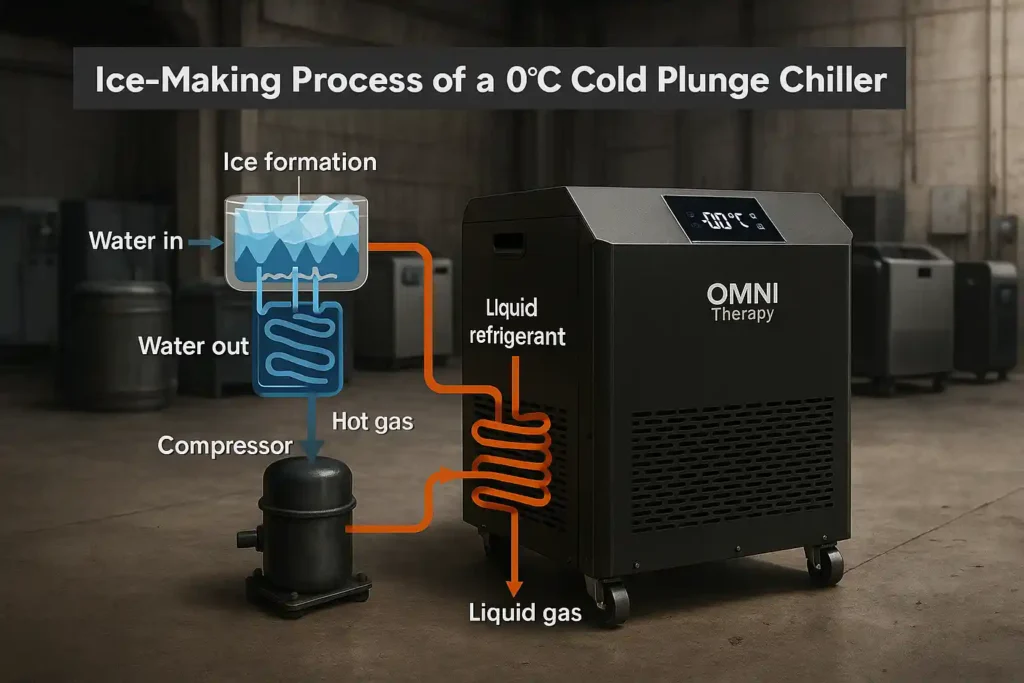
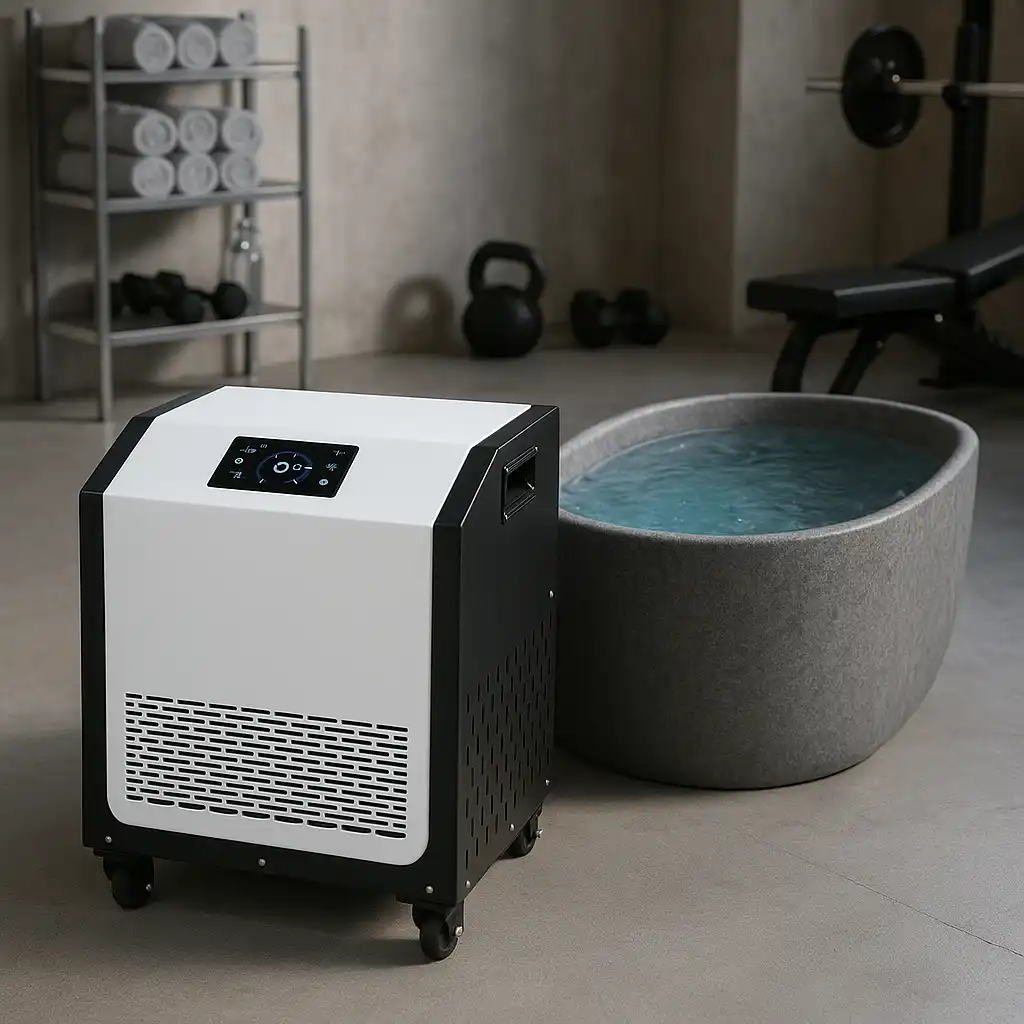
A chiller is a refrigeration unit. It pulls water from your tub, runs it through a heat exchanger that strips out the thermal energy, and returns the cold water back to the tub. Paired with a circulation pump and a filter, it maintains a set temperature continuously — no ice, no refilling, no guesswork.
The concept is simple. The challenge with a bathtub is not the chiller itself — it is everything surrounding the chiller. The vessel it is connected to matters enormously, and a standard bathtub has several characteristics that make a chiller’s job significantly harder than it needs to be.
The Four Real Problems with a Bathtub Cold Plunge
Nobody talks about these honestly enough. They are not deal-breakers for everyone, but you need to know about them before spending money.
1. No Insulation Layer — The Chiller Works Twice as Hard
Purpose-built cold plunge tubs have 40 to 80mm of closed-cell foam insulation built into their walls. That insulation is not a luxury feature — it is what allows a 1HP chiller to maintain 10°C in a 300-litre tub without running flat out all day.
A standard acrylic or fibreglass bathtub has walls that are 4 to 6mm thick. Cast iron bathtubs are thicker, but cast iron conducts heat so efficiently that they are actually worse. There is no insulation. Heat moves freely in both directions between the cold water inside and the room temperature air outside.
In practice, this means your chiller runs far more frequently than it would with a proper cold plunge tub. It is compensating for constant heat gain rather than simply maintaining temperature. A chiller that would cycle on and off comfortably in an insulated tub will run near-continuously in a bathtub — and compressors that never get to rest wear out faster.
This is the main reason why, for a bathtub setup specifically, 1HP is the minimum you should consider — not 0.5HP, regardless of what the volume calculation suggests. The uninsulated walls change everything. A 0.5HP unit in a standard bathroom bathtub in a room above 20°C will struggle to maintain anything below 15°C on a warm day. We have seen it burn out within a year under those conditions.
2. The Shape Is Wrong for Full Immersion
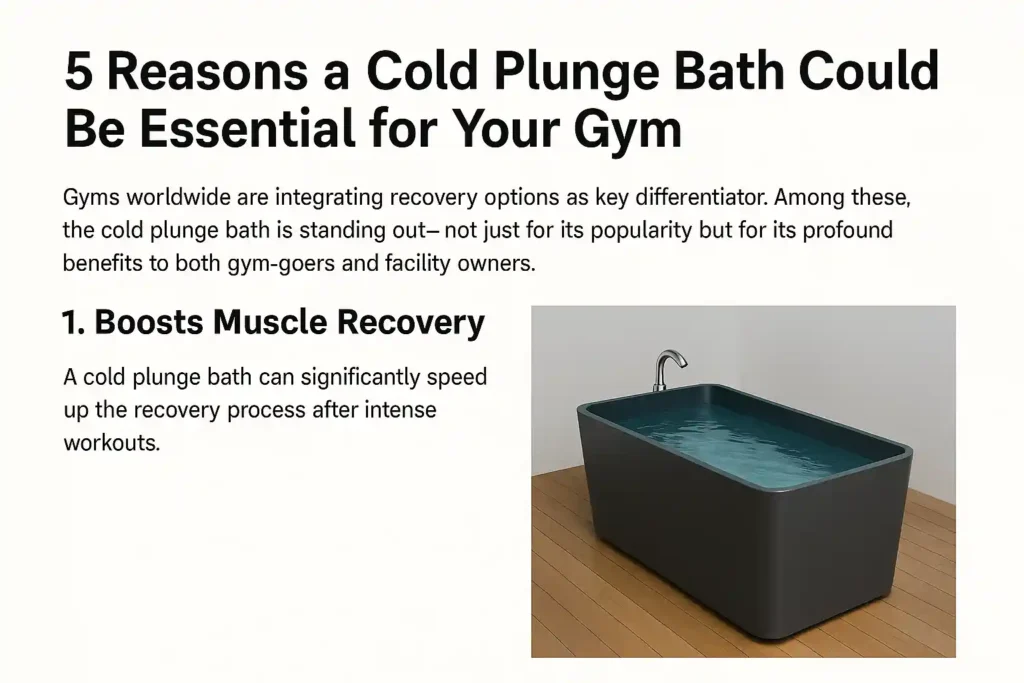
This one surprises people. A standard bathtub is designed for lying down in shallow water. The depth from base to overflow is typically 35 to 45cm. When you lie down, water covers your body horizontally — but your shoulders, neck, and upper chest are either barely submerged or above the waterline entirely.
Effective cold immersion therapy requires the water to cover your body up to at least the neck. The research on cold water immersion — including the studies cited in sports medicine journals — is based on full-body submersion, not partial coverage. Half-body cold exposure in a bathtub produces some benefit, but it is not the same physiological stimulus as proper immersion.
A dedicated cold plunge tub is typically designed for upright seated or upright standing immersion, with a depth of 80 to 100cm. You sit or stand in it with water up to your shoulders. That is full immersion. A bathtub, regardless of how cold the water gets, cannot replicate this unless you have an unusually deep model.
3. No Built-In Water Ports
Purpose-built cold plunge tubs have dedicated inlet and outlet ports for the chiller connection. Bathtubs have a drain at the bottom and an overflow near the top — neither is designed for continuous recirculation.
To connect a chiller to a bathtub, you either run hoses over the rim (which works but looks messy and creates trip hazards) or you modify the existing drain fitting (which requires plumbing work and is not reversible without replacing the fitting). Neither option is as clean or reliable as a tub built for the purpose.
4. Water Volume Is Inconsistent
A bathtub with the drain open loses water immediately. You are entirely dependent on keeping the plug in, and most bathtub plugs are not perfectly watertight under continuous circulation pressure. Small leaks that you would not notice during a normal bath become significant over 24 hours of continuous chiller operation. Managing water level in a bathtub cold plunge is an ongoing minor irritation that simply does not exist with a purpose-built tub.
So When Does a Bathtub Cold Plunge Actually Work?
With all of that said — it is not impossible, and for some people it genuinely makes sense. Here is when a bathtub setup is a reasonable choice.
You are testing cold therapy before committing to a dedicated setup. If you have never done regular cold immersion and want to experience it before spending more money, connecting a chiller to your bathtub for a few months is a legitimate approach. You will get a sense of whether cold therapy is something you will actually stick with.
Your bathtub is unusually deep. Some Japanese-style soaking tubs and freestanding deep soaking baths have depths of 60cm or more. These are meaningfully better for cold immersion than a standard shallow bathtub, and the shape concern is partially addressed.
You are in a rented property and cannot install anything permanent. If your options are genuinely limited to what you already have, a bathtub chiller setup gives you cold water therapy without any structural changes to the property.
Budget is the primary constraint right now. A chiller alone paired with your existing bathtub costs less upfront than a chiller plus a new tub. If the budget genuinely does not allow for both right now, starting with the bathtub and upgrading the vessel later is a reasonable path.
How to Set Up a Cold Plunge Chiller with Your Bathtub
If you have decided a bathtub setup makes sense for your situation, here is how to do it properly.
What You Need
- A 1HP chiller with a built-in or compatible circulation pump
- Two lengths of reinforced PVC hose, minimum 3/4 inch internal diameter
- A filter housing in-line before the chiller inlet
- A bathtub edge hose holder or weighted hose clips to keep hoses in place
- A bathtub cover or insulating blanket to reduce surface heat gain
The flow sequence is non-negotiable: water leaves the tub via the outlet hose, passes through the filter, enters the chiller, and returns to the tub via the inlet hose. Filter before chiller — always. Particulates in unfiltered water will damage your chiller’s heat exchanger over time.
The Chiller That Makes This Easiest
The biggest practical headache with a bathtub setup is managing the number of separate components — external pump, separate filter housing, hose fittings for each. This is where an all-in-one unit makes a real difference.
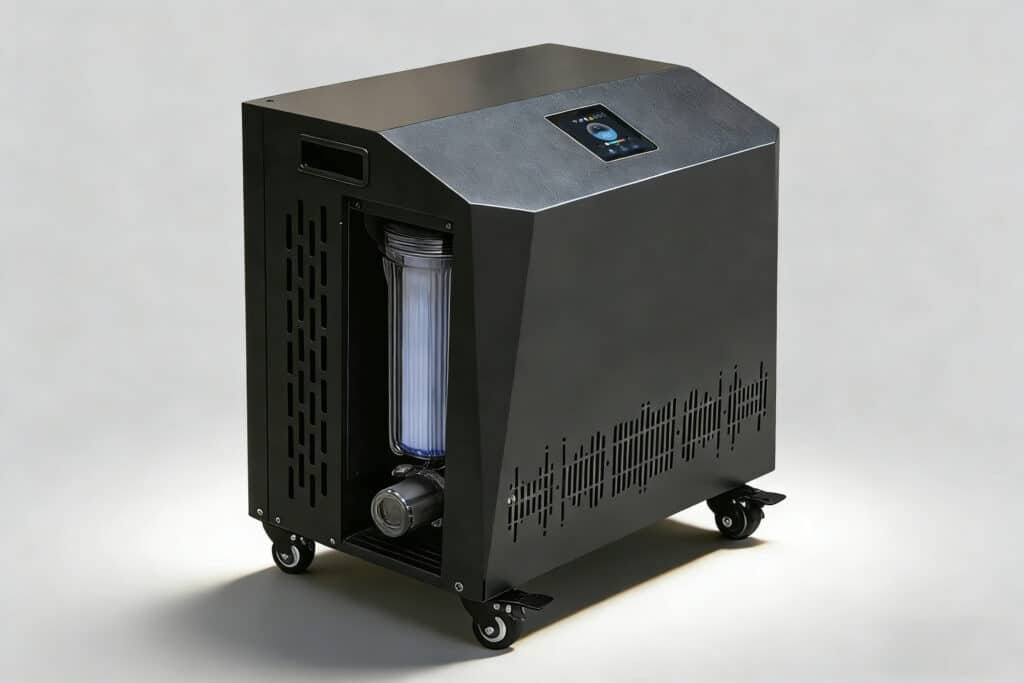
OMNI Ice CHM-10: 1HP Smart Cold Plunge Chiller
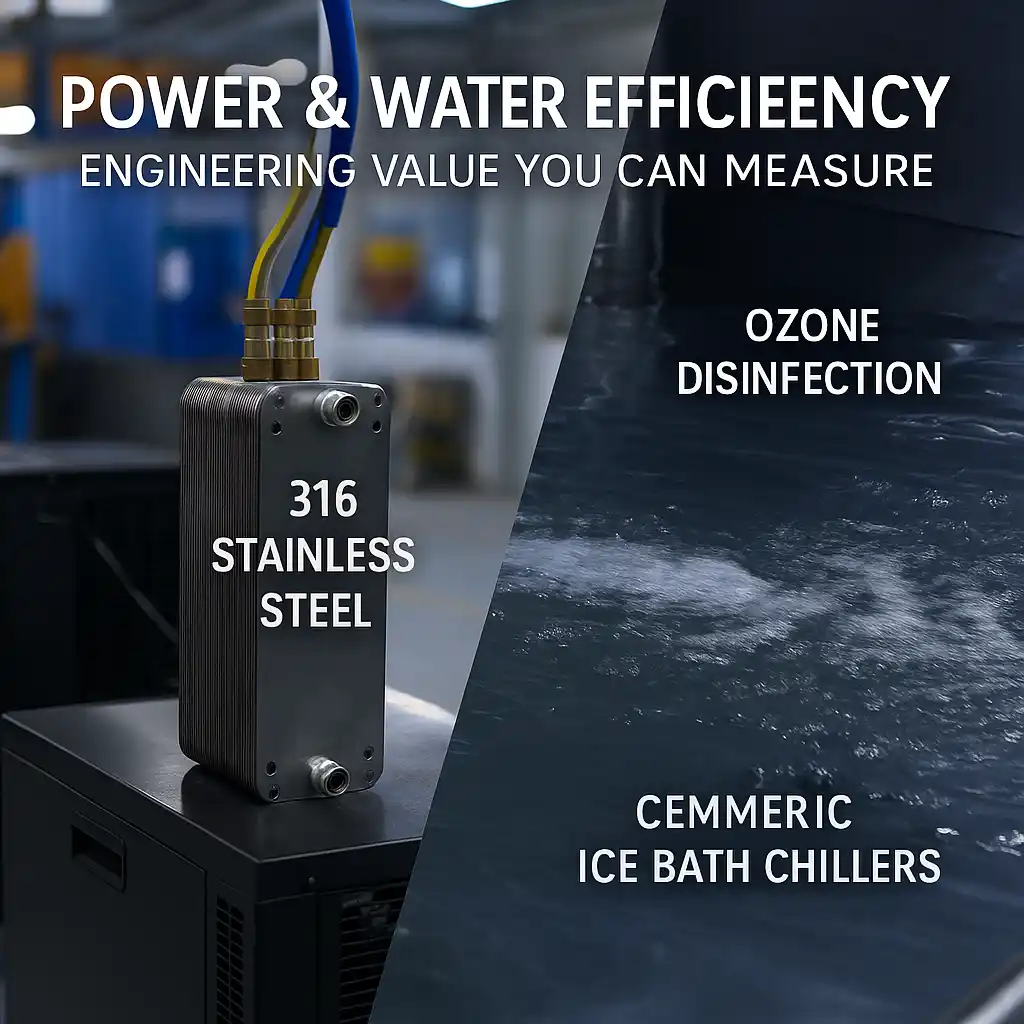
The CHM-10 is the chiller we recommend for bathtub setups specifically because it removes most of the complexity. It has a built-in self-priming circulation pump, an external replaceable filter, and an ozone disinfection system — all in one unit. You connect two hoses and plug it in. That is the entire installation.
- 1HP cooling capacity — handles an uninsulated bathtub in normal ambient conditions
- Temperature range: 3°C to 42°C (cooling and heating)
- Built-in pump — no separate pump purchase or installation
- External cartridge filter — easy to replace, keeps water clear
- Built-in ozone disinfection — chemical-free water management
- WiFi app control (iOS and Android) — set temperature remotely, monitor status
- IPX4 rated — suitable for bathroom environments
The heating function is also more useful in a bathtub context than people initially expect. Because bathtubs lose heat so quickly, on cold days the chiller may struggle to maintain a very low target temperature. Having the ability to set a warmer target — say 15°C instead of 8°C — and still get meaningful cold therapy benefits is a practical advantage. Some users also use the heating function for contrast therapy, alternating between hot and cold in the same tub.
Managing the Insulation Problem
You cannot add insulation to a bathtub’s walls without a renovation, but you can reduce heat gain from the top. A bathtub cover — even a simple cut-to-fit foam sheet — reduces surface evaporation and convective heat gain significantly. When the chiller is maintaining temperature between sessions, a cover can cut the chiller’s on-time by 30 to 40%. That extends the life of the compressor and reduces electricity cost.
If your bathroom is naturally warm, positioning a small fan to move air around the chiller’s exhaust also helps — chillers exhaust warm air, and in an enclosed bathroom that warm air can raise the ambient temperature around the unit, reducing its effective cooling capacity.
The Point Where It Makes More Sense to Get a Proper Tub
There is a specific moment where most people using a bathtub cold plunge reach the same conclusion: the limitation is the vessel, not the chiller.
Once you are doing cold therapy consistently — three to five sessions per week — the depth limitation of a bathtub becomes frustrating. Lying in 35cm of cold water is not the same as sitting immersed to your shoulders. The research, the anecdotal experience, and frankly the feeling during the session are all different. At that point, the question is not whether to upgrade — it is what to upgrade to.
The most practical upgrade for someone coming from a bathtub setup is a compact vertical cold plunge tub. You keep your chiller, you add the tub, and the combination gives you full immersion without taking up a lot of floor space.
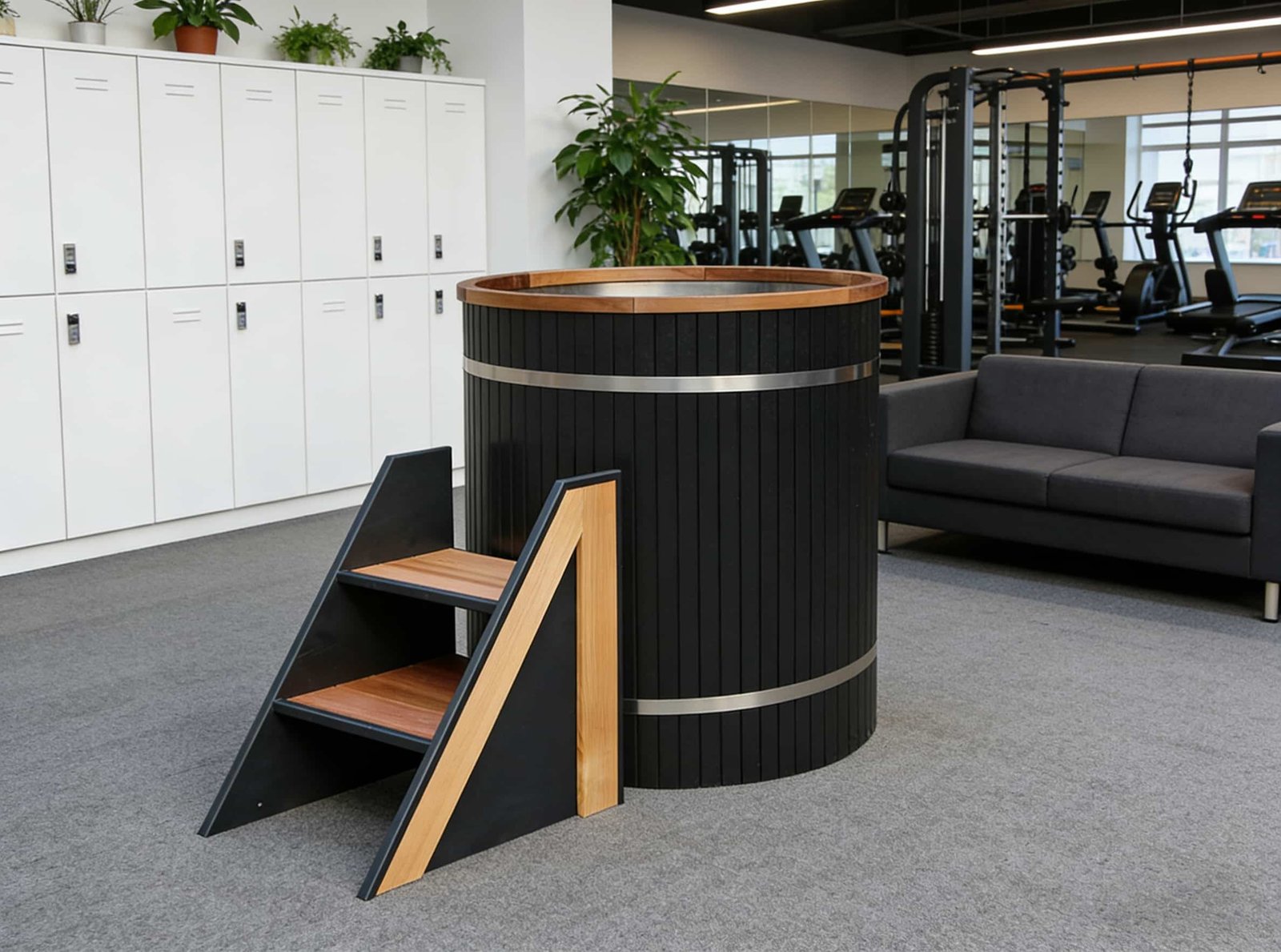
OMNI Ice WT-05: Hybrid Cold Plunge Tub
The WT-05 is designed specifically for this use case — personal cold therapy in a home, apartment, or small wellness space. It is compact (860 × 860mm footprint), deep enough for proper shoulder-level immersion (950mm internal depth), and built to last.
- Internal dimensions: 800 × 800 × 950mm — full immersion for one adult
- 304 stainless steel inner tub — hygienic, rust-resistant, easy to clean
- Red cedar and WPC outer shell — insulated, weather-resistant, looks good
- Foam-insulated lid included — reduces heat gain between sessions
- Wooden step included — safe entry and exit
- Pre-installed chiller connection ports — no drilling, connects directly to any standard chiller
- Indoor and outdoor use — fully weather-resistant exterior
The insulated walls of the WT-05 mean your CHM-10 chiller works with significantly less effort than it does with a bathtub — and the depth means you are getting actual full-body immersion rather than a partial soak.
The CHM-10 chiller and WT-05 tub together represent the most cost-effective path to a complete, properly functioning personal cold plunge setup. You get factory-direct pricing without the brand premium of consumer cold plunge companies, and both components are built to commercial quality standards.
| Setup | Upfront Cost | Immersion Depth | Temperature Control | Chiller Workload |
|---|---|---|---|---|
| Bathtub + 1HP chiller | Lower | Partial (35–45cm) | Manageable, not easy | High — runs often |
| WT-05 tub + CHM-10 chiller | Higher | Full (95cm) | Precise, stable | Normal — cycles properly |
| Branded all-in-one system | Highest | Full | Precise | Normal |
What About Using the Bathtub Alongside a Dedicated Tub?
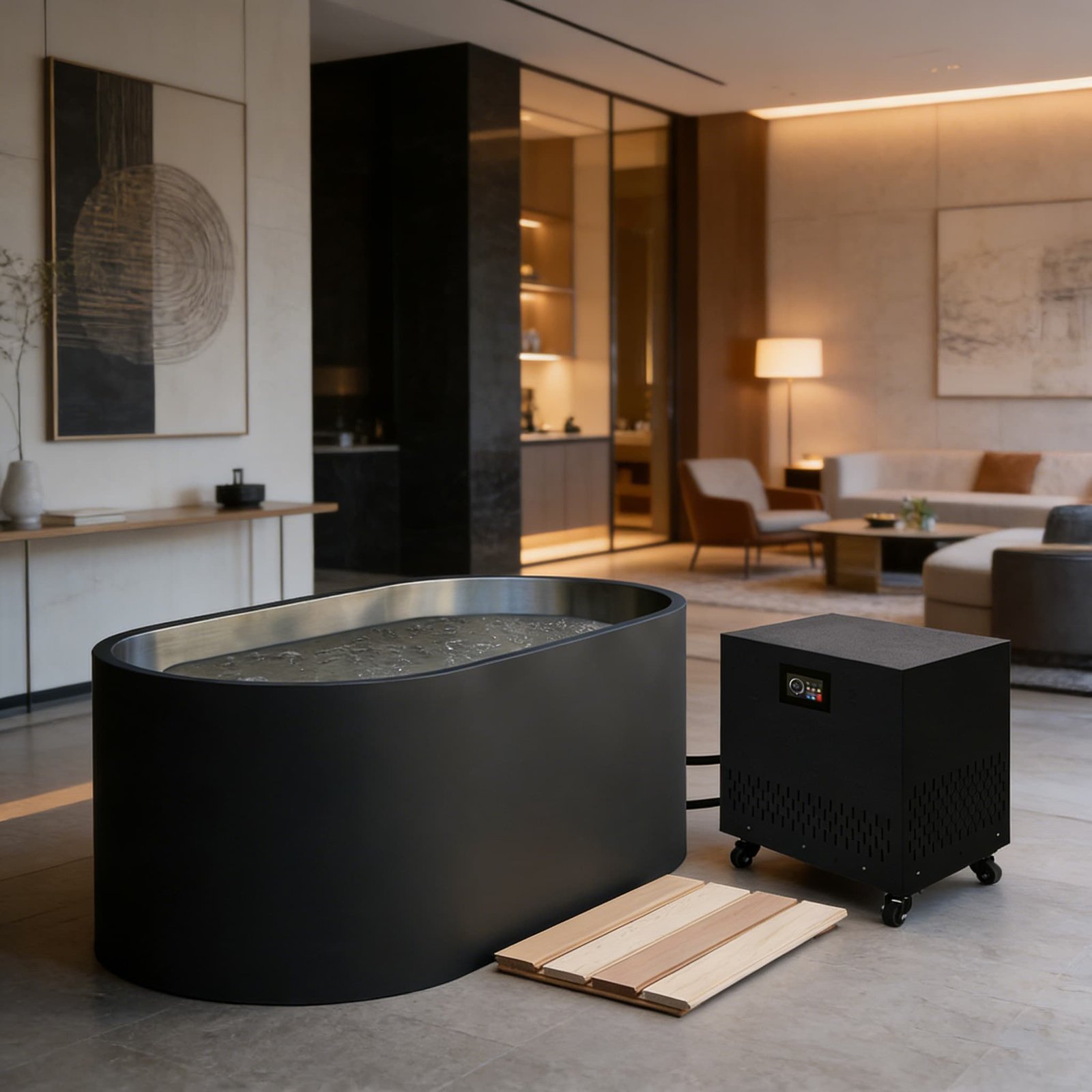
Some people end up keeping both. The bathtub gets used for contrast therapy — fill it with hot water while the cold plunge tub is at temperature, then alternate between the two. This is actually how contrast therapy is done in professional facilities: separate hot and cold vessels, switching between them on a timed protocol.
If that is something you are interested in, the CHM-10’s heating function becomes even more relevant — you can use it to heat the bathtub water for contrast sessions and cool the dedicated tub for the cold immersion. One chiller, two uses, depending on what you need that day.
The Bottom Line
A cold plunge chiller works with a bathtub. If that is what you have and you want to start cold therapy now, go ahead — use a 1HP unit, add a filter, get a cover for the tub, and manage expectations around depth and temperature stability.
But if you are asking whether a bathtub is the right vessel for serious, consistent cold therapy, the honest answer is no. The depth is wrong, the insulation is nonexistent, and the plumbing is a workaround. At some point, most people who stick with cold therapy end up with a proper tub anyway.
The smarter path — if the budget allows — is to do it right from the start. A compact vertical tub with insulated walls and a 1HP chiller with built-in pump and filtration is a complete system that works the way cold therapy is supposed to work. It takes up less than a square metre of floor space, requires minimal maintenance, and you will not find yourself wanting to upgrade six months later.
As a cold plunge chiller manufacturer that supplies gyms, wellness facilities, and individual buyers across more than 80 countries, we see both setups regularly. The bathtub workaround has its place. The dedicated setup is simply better — and for most people, the gap in price is smaller than they expect.
Not Sure What Setup Is Right for You?
We supply both the CHM-10 chiller and the WT-05 tub factory-direct, with no minimum order for individual buyers. If you are unsure whether a bathtub setup will meet your needs or want a recommendation based on your specific situation, get in touch and we will give you a straight answer.