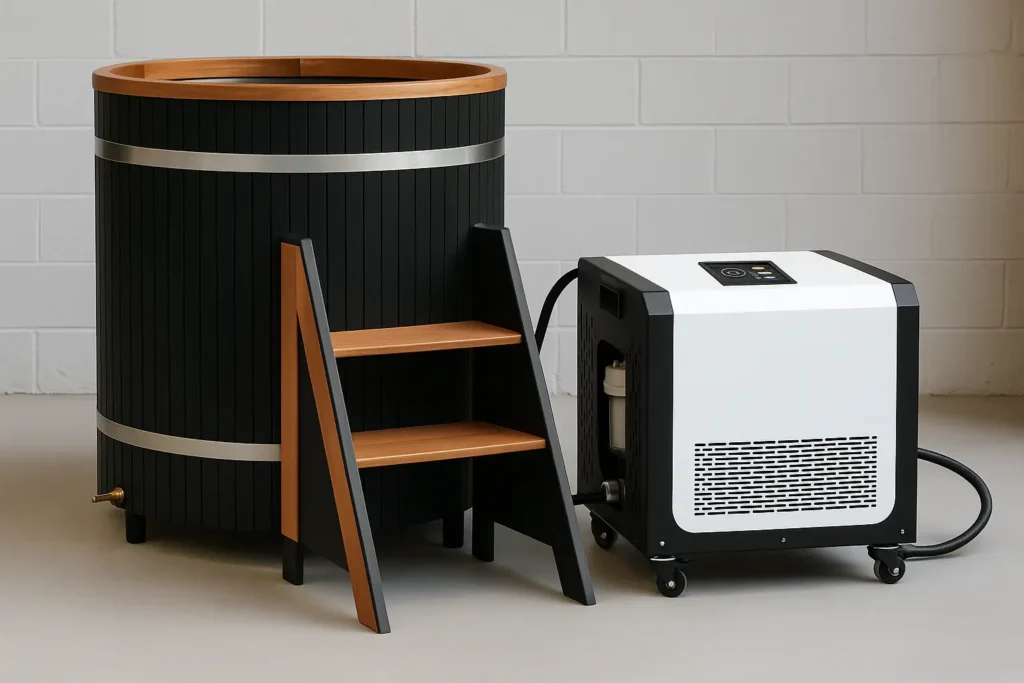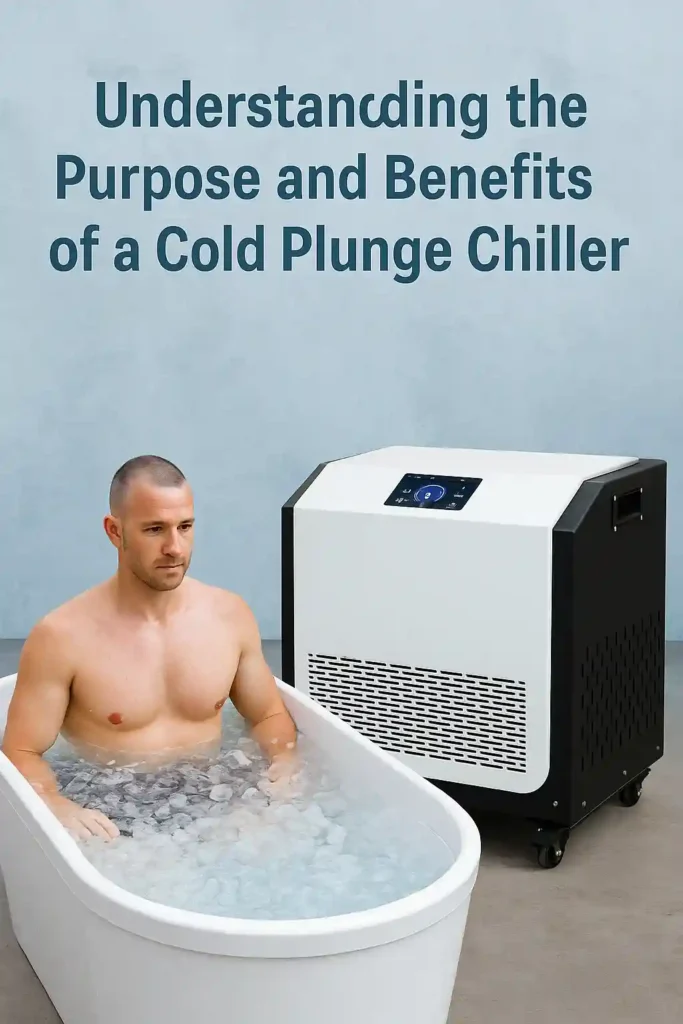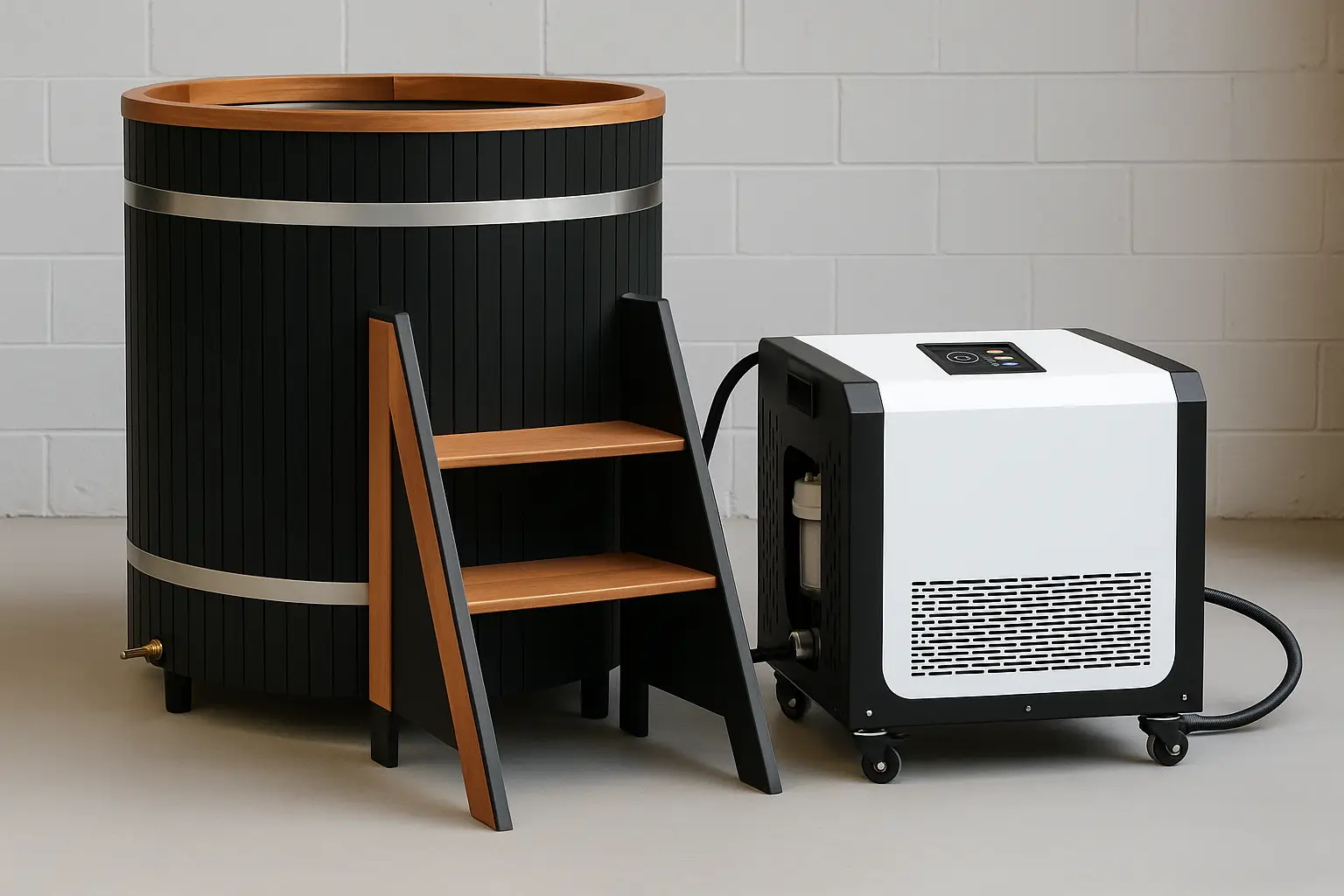
If you’re planning your first cold plunge chiller setup—whether at home, in a gym, or as part of a spa facility—getting the chiller size right is critical.
This guide focuses on how horsepower (HP), tub volume, and environment interact, so you can size your system correctly without wasting energy or shortening equipment lifespan.
Choosing the right size isn’t about buying the biggest unit available. It’s about balance: enough cooling power to reach and maintain 0–5°C, without overworking the compressor.
Why Proper Sizing Matters for Cold Plunge Performance
Incorrect sizing is the most common reason cold plunge systems underperform.
An undersized chiller may run constantly yet never reach target temperature
An oversized chiller may short-cycle, increasing energy cost and wear
For example:
A 0.8HP unit can handle a 300L indoor tub in mild climates
The same unit may struggle outdoors in summer heat
A 2HP commercial unit on a small indoor tub wastes power with no benefit
Correct sizing ensures:
Faster pull-down time
Stable temperature during repeated plunges
Longer compressor life and lower operating cost
Understanding Chiller Horsepower (HP) and Cooling Efficiency
Horsepower (HP) defines how much cooling energy your chiller can deliver per hour. But HP alone doesn’t tell the full story — you also have to consider ambient temperature, insulation, and tub material.
| Chiller Power | Ideal Tub Capacity | Cooling Speed | Recommended Use |
|---|---|---|---|
| 0.8 HP | 200–300 L | Moderate | Compact home setups |
| 1.0 HP | 300–400 L | Fast | Home or small gym |
| 1.5 HP | 400–500 L | Very fast | Gym or spa |
| 2.0 HP+ | 600 L+ | Ultra fast | Commercial or multiple tubs |
If you live in a warmer climate or have an outdoor installation, move one size up from the chart.
A 1HP unit can cool a 200L tub from 25°C to 5°C in roughly 2.5–3 hours, but a 1.5HP chiller may do it in under 2 hours.
👉 For consistent 0°C ice-bath performance, explore our stainless steel chillers designed for professional use — each engineered for continuous 24/7 operation and zero-frost reliability.
Matching Chiller Power to Your Ice Bath Tub Size
Tub volume is the single most important variable in sizing.
| Tub Volume | Recommended HP | Target Cooling Range | Typical Scenario |
|---|---|---|---|
| ≤ 300 L | 0.8 HP | 5–10°C | Personal recovery |
| 300–400 L | 1.0 HP | 3–7°C | Home gym |
| 400–600 L | 1.5 HP | 0–5°C | Spa / shared use |
| 600 L+ | 2.0 HP+ | 0°C | Heavy-duty use |
Material matters:
Stainless steel tubs lose heat faster
Acrylic or wood with insulation reduces cooling demand
A well-insulated tub can lower required HP by up to 30%.
Smart Control Systems and Energy Savings
Modern chillers go far beyond simple cooling. Today’s smart cold plunge chillers include Wi-Fi app control, digital thermostats, and variable-speed compressors that adapt to your environment automatically.
This technology reduces temperature fluctuations to ±0.2°C and can save up to 30% in energy usage compared to constant-speed models.
For home setups, smart chillers also allow scheduling — pre-cooling your tub before workouts or early mornings for consistent recovery sessions.
💡 Tip: Choose a chiller with O3 + UV water purification to reduce maintenance and keep your system running longer.
Installation Environment and Ambient Load Factors
Even a well-sized cold plunge chiller can underperform if the installation environment is ignored. In real-world setups, environmental heat load often matters just as much as horsepower.
The following five factors directly influence how much cooling capacity your system actually needs:
Ambient temperature
Hot surrounding air continuously transfers heat back into the water, especially in outdoor or garage installations.Insulation quality
Poor insulation leads to constant heat gain, forcing the chiller to run longer and cycle more frequently.Water circulation rate
Frequent refilling or high-flow circulation introduces warmer water into the system, increasing cooling demand.Usage frequency
Back-to-back plunges raise water temperature faster than most people expect.Ventilation around the chiller
Inadequate airflow traps heat around the condenser, reducing cooling efficiency and shortening compressor life.
👉 Practical rule:
For outdoor or semi-enclosed setups, oversizing by at least 0.5HP is often necessary.
If calculations suggest 1HP, choosing a 1.5HP unit usually delivers more stable long-term performance.
Related Resource
Learn more about long-term reliability in our cold plunge chiller manufacturer’s technical overview
Why 316 Stainless Steel Makes a Difference
When evaluating a water chiller for ice baths, material selection is often overlooked — yet it plays a major role in durability, hygiene, and long-term stability.
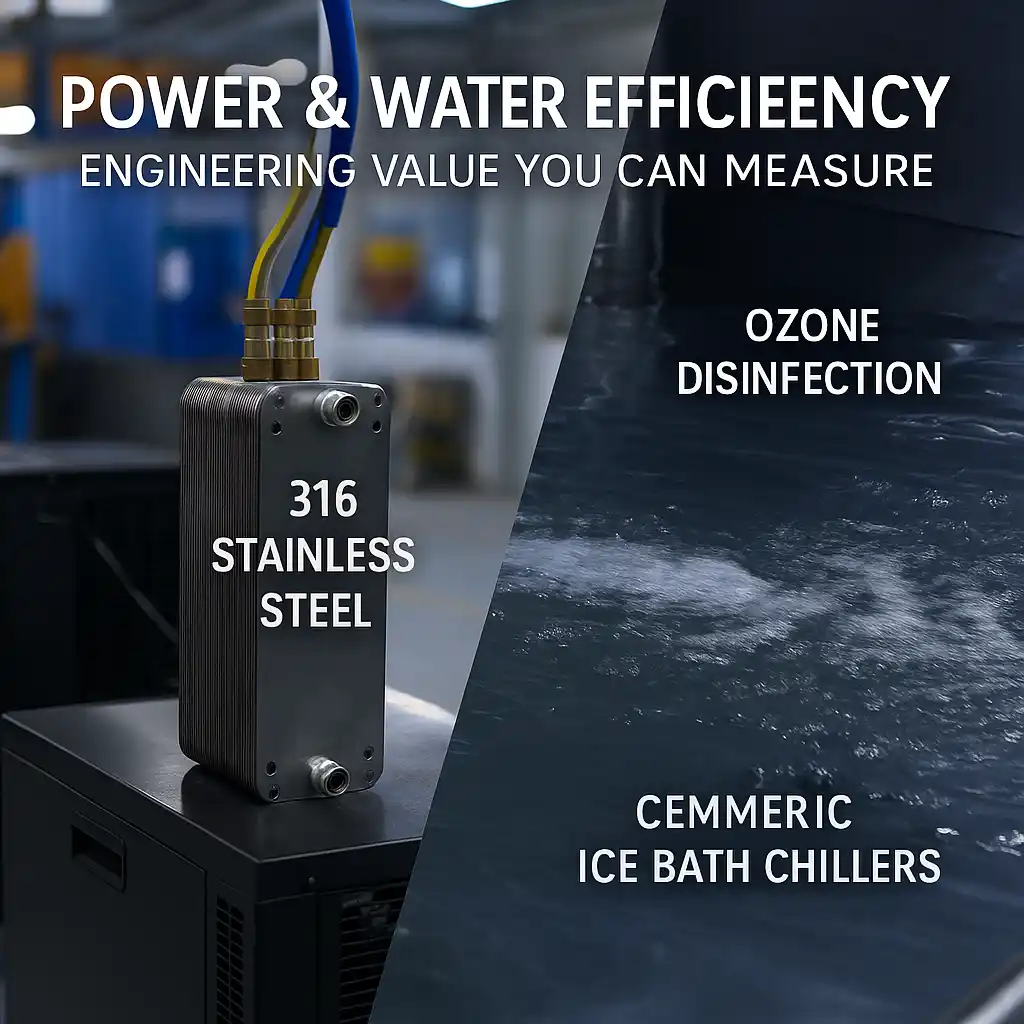
Many low-cost chillers use aluminum or copper heat exchangers. Under ozone treatment or continuous cold-water exposure, these materials corrode quickly and may introduce metallic odors or performance loss.
In contrast, 316 stainless steel offers:
Superior corrosion resistance
Hygienic, non-reactive water contact
Stable performance under continuous operation
This is why professional cold plunge systems rely on 316 stainless steel plate heat exchangers paired with industrial-grade compressors. For spas, gyms, and serious home users, these materials ensure consistent cooling without premature component failure.
Common Sizing Mistakes (and How to Avoid Them)
Incorrect chiller sizing is one of the most common reasons cold plunge systems fail to meet expectations. These issues are rarely caused by the equipment itself — but by mismatched system design.
Avoid these frequent mistakes:
Underestimating total water volume after user displacement
Ignoring ambient temperature during sizing calculations
Choosing based on price rather than cooling capacity
Installing the chiller in poorly ventilated spaces
Mismatching pump flow rate with the chiller’s inlet requirements
A properly matched cold plunge chiller operates more efficiently, maintains stable temperatures, and requires less maintenance — delivering a better plunge experience over time.
Real-World Example: 500L Ice Bath Setup
Let’s look at a realistic mid-size installation to see how sizing works in practice.
Setup conditions:
Tub volume: 500L acrylic tub (indoor)
Room temperature: 26°C
Target water temperature: 4°C
Usage: 2–3 sessions per day
Recommended configuration:
Chiller size: 1HP
Cooling time: ~2.5–3 hours
Estimated power draw: 800–1,000W
If the same system were installed outdoors in 33°C summer conditions, upgrading to 1.5HP would be recommended to maintain consistent recovery cycles and reduce compressor stress.
This small increase in capacity significantly improves long-term reliability and temperature stability.
Expert Recommendation: Start with Data, Not Guesswork
Choosing the right cold plunge chiller is less about chasing maximum horsepower and more about understanding how your full setup behaves as a system.
Before making a decision, always evaluate:
Tub size (total water volume)
Ambient temperature range
Insulation and placement
Frequency of use
Potential future expansion
For most home and semi-commercial users, a 1HP to 1.5HP system provides the best balance between cooling speed, efficiency, and long-term durability.
👉 If you want a complete, decision-focused comparison that connects sizing logic with real home-use scenarios, see our main guide:
👉《Best Cold Plunge Chiller for Home Use: How to Choose the Right Model》
That guide consolidates performance ranges, use cases, and practical recommendations into one clear reference.
Research Insight: Why Cold Plunge Consistency Matters
Cold plunge therapy isn’t just about intensity — consistency is what drives results.
According to Harvard Health Publishing, controlled cold exposure can help reduce inflammation, improve circulation, and support muscle recovery when applied at appropriate temperatures.
Without a properly sized chiller, water temperature rises quickly, making consistent daily exposure difficult to maintain. Precision-controlled systems remove that variability, allowing users to access the physiological benefits of cold therapy reliably — without relying on ice or guesswork.