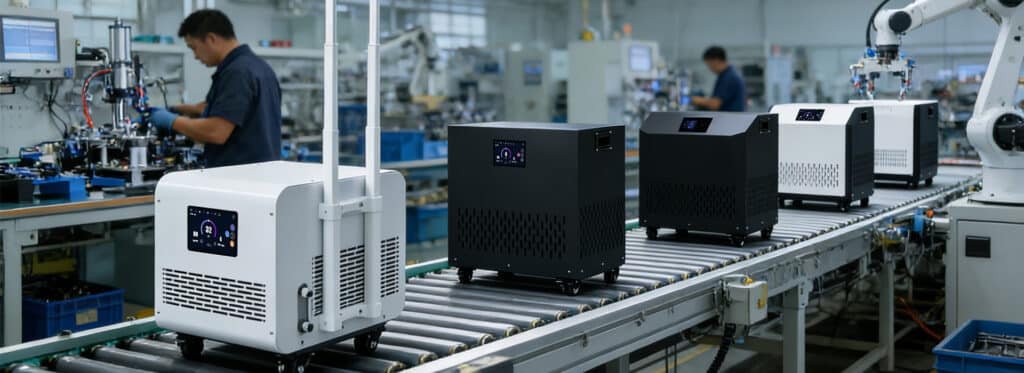
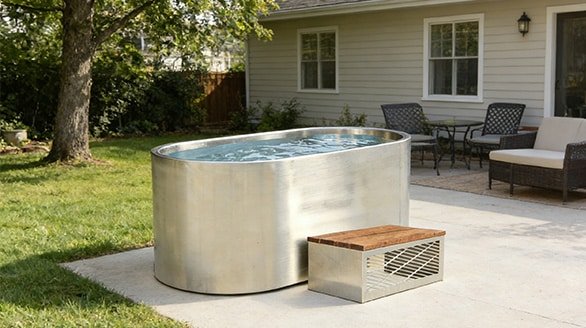
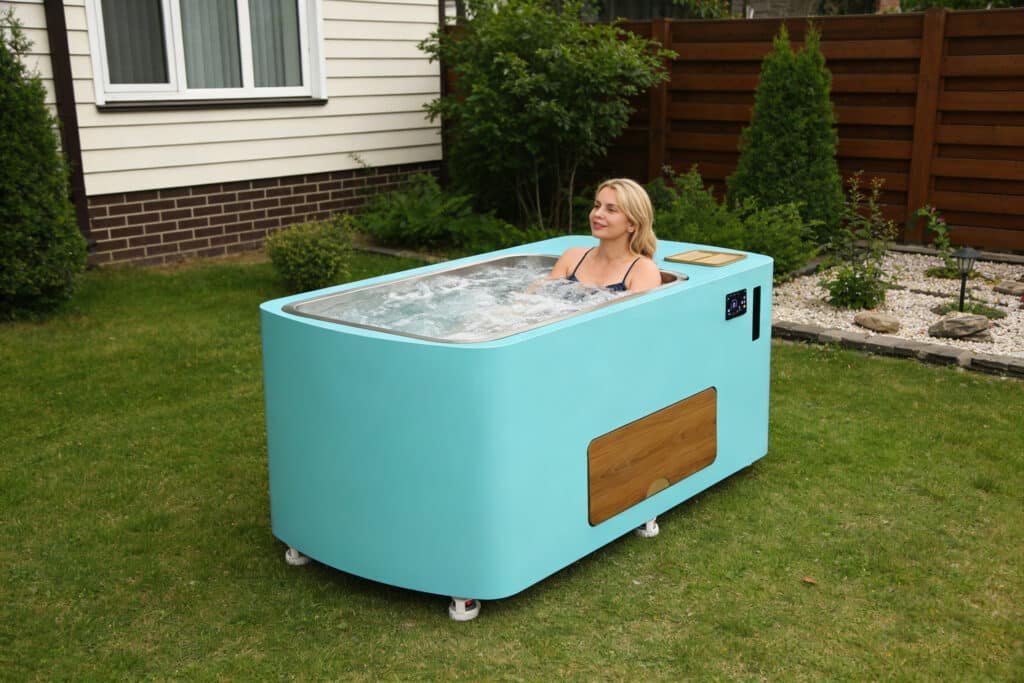
A properly matched water chiller is critical for maintaining consistent 0–5 °C performance in cold plunge therapy. Choosing the best water chiller for cold plunge use is not about buying the most powerful unit available—it’s about selecting a system that balances cooling capacity, circulation stability, filtration support, and tub compatibility.
This guide focuses on the technical factors that determine whether a chiller will perform reliably in real-world plunge setups:
What technical features matter when selecting a chiller
How to match a chiller to your tub’s water volume
Why some chillers fail in plunge systems
A real-world setup example: CHU-10-RV + WT-13 barrel tub
Common pitfalls and how to avoid them
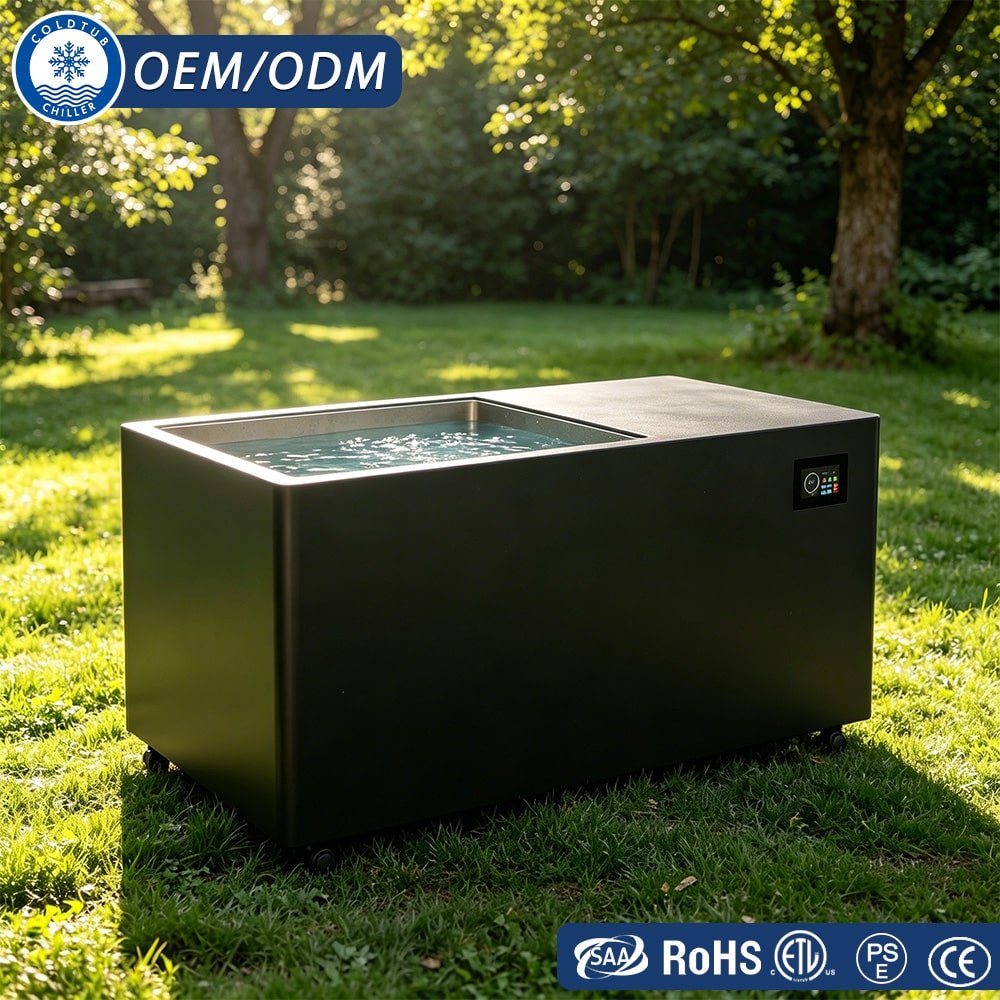
What Makes a Water Chiller Suitable for Cold Plunge Use?
According to ASHRAE hydronic cooling guidelines, any chiller used for human-contact water must support:
Sustained low-temperature operation (ideally 0–5 °C)
Stable, uninterrupted water circulation
Compatibility with external filtration
Resistance to flow disruption caused by debris or airlocks
Many aquarium or beverage chillers fail in cold plunge systems because they are not designed for large water volumes or continuous duty cycles. Common issues include false flow alarms, overheating, and inconsistent cooling.
Why Horsepower Alone Is Not Enough
Horsepower (HP) is only one part of the equation. Two chillers with the same HP can perform very differently depending on:
Actual cooling output (kW)
Pump stability and priming reliability
Heat exchanger material
System resistance caused by filters and tubing
This is why cold plunge systems require purpose-built chillers, not general-purpose cooling units.
Example: A Scientifically Matched 1HP Cold Plunge System
A well-balanced example is a 1HP cold plunge chiller paired with a properly sized, insulated tub.
In a ~300 L plunge setup, a correctly engineered 1HP system can:
Pull water down to 5 °C in ~90 minutes
Maintain stable temperature without short cycling
Operate continuously without triggering flow errors
Key technical characteristics that matter here include:
Self-priming circulation pumps
Support for external cartridge filtration
Corrosion-resistant heat exchangers
Stable refrigerant performance at low temperatures
This is the difference between a chiller that works on paper and one that works every day.
Matching Chiller Power to Tub Volume (Technical Reference)
| Tub Volume | Recommended Chiller Class | Typical Pull-Down Time |
|---|---|---|
| ≤ 200 L | 0.8 HP | ~110 minutes |
| 200–350 L | 1.0 HP | ~90 minutes |
| 350–500 L | 1.5 HP | ~60 minutes |
Oversizing a chiller can actually reduce efficiency due to short cycling, while undersizing leads to long cooldown times and unstable temperatures.
Filtration Is Not Optional in Cold Plunge Systems
Even the best chiller cannot perform properly without filtration. Skin oils, hair, and small debris increase system resistance and can trigger no-flow alarms.
For stable operation:
Use an external cartridge filter (20–50 micron)
Replace cartridges every 1–2 weeks, depending on use
Ensure proper priming to eliminate trapped air
According to the Centers for Disease Control and Prevention Spa Water Safety Guidelines, proper filtration and circulation are essential for safe and hygienic immersion systems.
Common Technical Mistakes to Avoid
Using aquarium-style chillers
Running without external filtration
Oversizing HP without considering water volume
Poor system priming leading to airlocks
Each of these issues can reduce cooling performance and shorten equipment lifespan.
Summary: Choose Based on System Balance, Not Marketing Claims
The best water chiller for cold plunge use is one that:
Matches your actual water volume
Maintains stable 0–5 °C cooling
Supports reliable circulation and filtration
Operates efficiently without unnecessary power waste
Cold plunge performance depends on system balance, not hype.
Final Call: Which One Is Right for You?
| Use Case | Recommended Chiller Class |
|---|---|
| Portable tub / small volume | 0.8 HP class |
| Home use, 250–300 L tub | 1.0 HP class |
| Multi-user / commercial spa | 1.5 HP class |
Rather than choosing based on model names alone, the correct approach is to evaluate tub volume, cooling pull-down speed, circulation stability, and filtration compatibility together.
To see how these factors translate into real home-use decisions, including which setups make sense, which are overkill, and how different options compare in practice, refer to the full home-use decision guide here:
👉 《Best Cold Plunge Chiller for Home Use: How to Choose the Right Model》